


We Are Open 24 Hours a Day, 7 Days a Week, Including Weekends and Public Holidays.

Understanding FRP Grating Price Factors Options and Comprehensive Guide
Understanding FRP Grating Price Factors & Your Options
Fiberglass Reinforced Polymer (FRP) grating is a robust, corrosion-resistant alternative to traditional materials like steel. But navigating the world of FRP grating price can be complex. This article will break down the key factors influencing cost, explore different grating types, and help you understand what to expect when sourcing FRP grating. We’ll cover material choices, mesh sizes, load capacities, and quantity discounts to provide a comprehensive guide for buyers. Understanding these elements will empower you to make an informed purchasing decision.
Key Factors Affecting FRP Grating Price
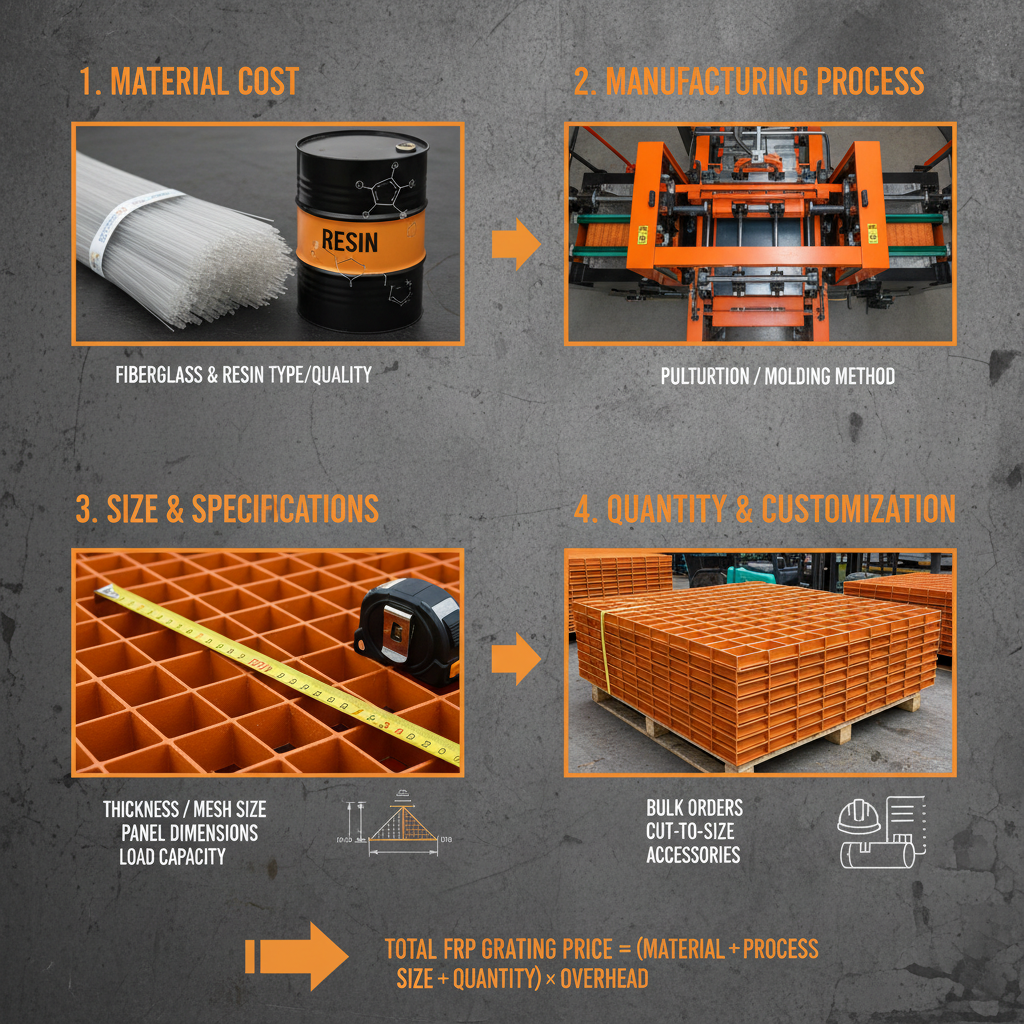
Several core elements directly impact the FRP grating price. The resin type is a significant driver, with polyester being the most economical, followed by vinyl ester and epoxy resins (which offer superior corrosion resistance and strength). Fiberglass content also plays a role – higher fiberglass content leads to increased strength and, therefore, a higher price. The mesh size and thickness of the grating are crucial; larger mesh sizes generally mean lower material costs, while thicker grating offers higher load-bearing capacity at a premium. Finally, the complexity of the project – including custom sizing and edge treatments – will add to the overall cost. HLFRP offers tailored solutions to fit varying budgetary constraints.
Key Highlights: Resin type, fiberglass content, mesh size, grating thickness, and customization all contribute to the final FRP grating price.
Comparing FRP Grating Types and Their Prices
Different types of FRP grating cater to specific applications and budgets. Molded grating is typically more cost-effective for standard sizes and applications, while pultruded grating offers greater design flexibility and load capacity, thus commanding a higher price. Covered grating, where the bearing bars are enclosed, adds to the cost due to increased material usage but offers enhanced safety. The choice depends on your project's requirements, load demands, and safety considerations. HLFRP provides a wide selection of FRP grating types.
FRP Grating Type Comparison:
• Molded Grating: Cost-effective, suitable for standard applications.
• Pultruded Grating: Greater load capacity, design flexibility, higher price.
• Covered Grating: Enhanced safety, increased material usage, premium price.
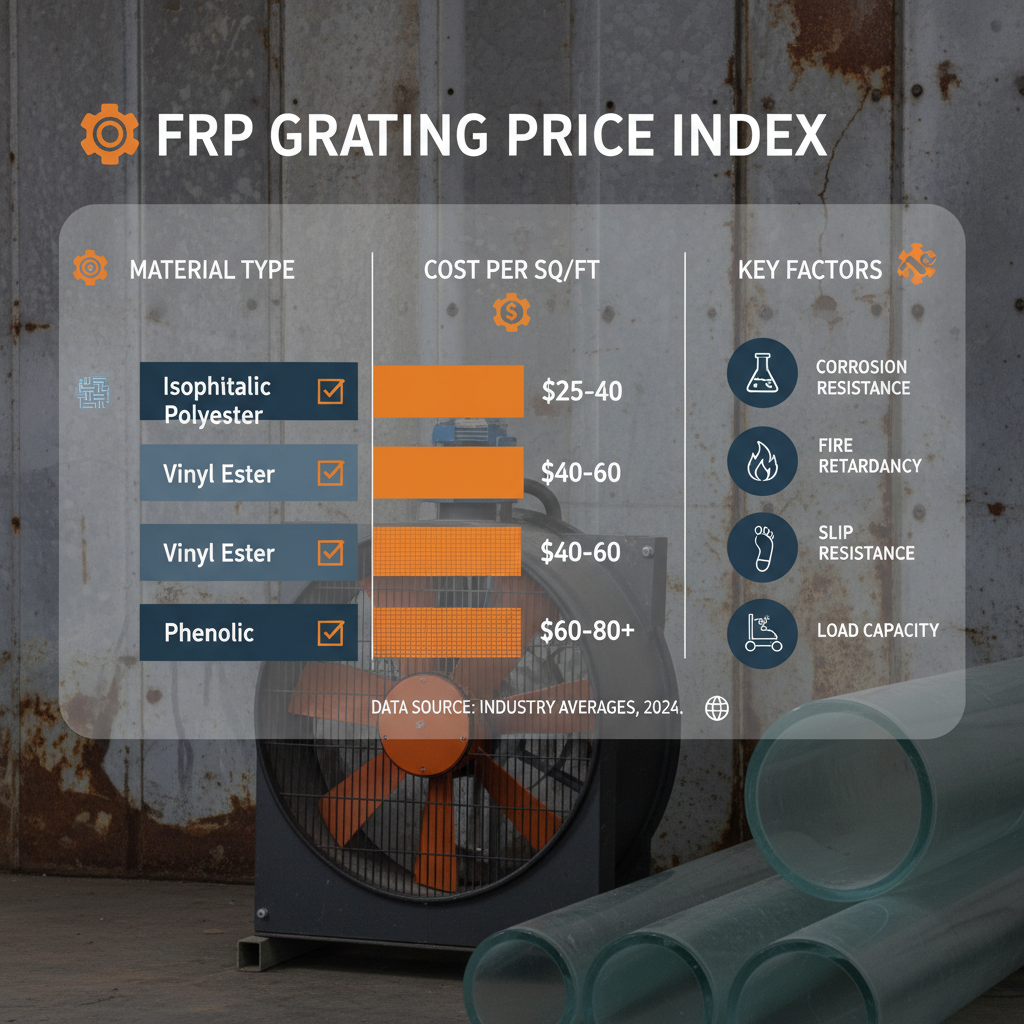
FRP Grating Price Ranges: A Quick Overview
Providing precise FRP grating price without project specifics is challenging. However, here’s a general price range to give you a ballpark estimate. These prices are per square foot and can fluctuate based on supplier, quantity, and current market conditions. It’s crucial to obtain a customized quote for your specific needs.
The Influence of Quantity on FRP Grating Price
Like many products, the FRP grating price is significantly impacted by the order quantity. Suppliers typically offer tiered pricing, with larger orders receiving substantial discounts. This is due to economies of scale in manufacturing and shipping. Therefore, consolidating your grating needs and ordering in bulk can lead to significant cost savings. HLFRP provides competitive bulk pricing for large-scale projects.
Shipping and Installation Costs: Don’t Forget These
Remember that the final cost isn’t just the price of the grating itself. Shipping costs can be substantial, especially for large or heavy orders. Installation costs also need to be factored in. While FRP grating is relatively easy to install, you may need to hire professional installers, depending on the complexity of the project. Consider these additional expenses when budgeting for your FRP grating purchase. HLFRP can provide shipping quotes and recommendations for qualified installers.
Conclusion: Making an Informed FRP Grating Purchase
Understanding the factors that influence FRP grating price is essential for making a smart investment. By considering resin type, fiberglass content, grating type, quantity, and shipping/installation costs, you can secure the best value for your needs. HLFRP is dedicated to providing high-quality FRP grating at competitive prices. Contact us today for a customized quote and expert advice.
Frequently Asked Questions (FAQs)
What are the long-term cost savings of using FRP grating over steel?
While the initial investment for FRP grating might be higher than steel, the long-term cost savings are substantial. FRP grating doesn't rust or corrode, eliminating the need for frequent painting, maintenance, and replacement – costs associated with steel. This reduces lifecycle costs significantly. Furthermore, FRP is lightweight, reducing installation costs and potential structural support requirements. These factors contribute to a lower total cost of ownership over the grating's lifespan.
How does the resin type affect the price and performance of FRP grating?
The resin type significantly impacts both the price and performance. Polyester resin is the most economical but offers moderate corrosion resistance. Vinyl ester resin provides improved corrosion resistance and strength, commanding a higher price. Epoxy resin offers the best corrosion resistance and mechanical properties, making it ideal for harsh environments but also the most expensive option. Choosing the right resin depends on the specific application and the level of protection required.
Can FRP grating be cut to custom sizes?
Yes, FRP grating can be cut to custom sizes using standard cutting tools like saws with abrasive blades. However, it's important to use proper safety precautions and follow the manufacturer's recommendations. Cutting FRP grating can release fiberglass particles, so wearing a dust mask and eye protection is essential. HLFRP also offers custom cutting services to ensure precise sizing and minimize on-site fabrication.
What load capacities are available for FRP grating?
FRP grating is available in a wide range of load capacities to suit various applications. Load capacities are determined by factors like resin type, fiberglass content, mesh size, and grating thickness. Standard load capacities typically range from 300 lbs to over 1,000 lbs per square foot. It's crucial to select grating with a load capacity that meets or exceeds the anticipated loads in your application. HLFRP can provide technical specifications and load capacity charts for all our FRP grating products.






Address
20 Xingyuan South Street, Zaoqiang County, Hengshui City, Hebei Province, China


