


We Are Open 24 Hours a Day, 7 Days a Week, Including Weekends and Public Holidays.

Exploring Diverse Fiber Reinforced Polymer Types and Their Applications
Understanding Fiber Reinforced Polymer Types
Fiber reinforced polymers (FRPs) are composite materials gaining immense popularity across numerous industries, from aerospace and automotive to construction and marine applications. These materials offer a unique combination of high strength, lightweight properties, and corrosion resistance. Understanding the different fiber reinforced polymer types is crucial for selecting the optimal material for a specific application. This article will delve into the most common FRP types, their characteristics, and applications, providing a comprehensive guide for engineers, designers, and anyone interested in these advanced materials. Choosing the correct FRP can dramatically improve product performance and longevity.
What are Fiber Reinforced Polymers?
At their core, FRPs consist of two main components: a fiber reinforcement and a polymer matrix. The fibers provide the strength and stiffness, while the polymer matrix binds the fibers together, distributing the load and protecting them from environmental damage. The combination results in a material with superior properties compared to its individual components. The selection of the fiber and matrix dictates the final properties of the FRP. HLFRP specializes in tailoring these combinations to meet diverse industry needs.
Key Benefits of FRPs: High strength-to-weight ratio, corrosion resistance, design flexibility, and excellent fatigue performance.
Common Fiber Types in FRPs
The type of fiber used significantly influences the mechanical properties of the resulting FRP. Here are some of the most commonly used fiber types:
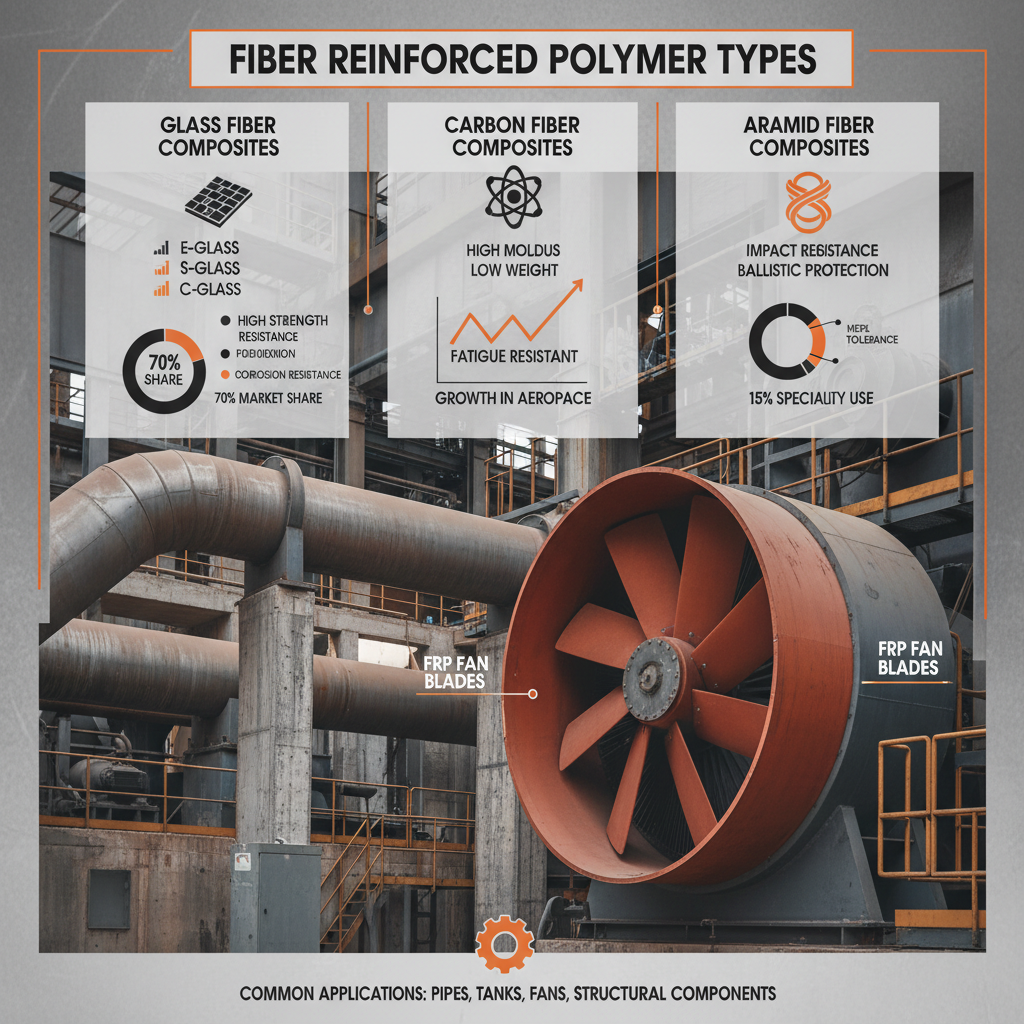
- Glass Fiber: The most widely used fiber due to its relatively low cost and good tensile strength.
- Carbon Fiber: Known for its exceptional strength and stiffness, but is more expensive than glass fiber.
- Aramid Fiber: Offers high toughness and impact resistance, often used in ballistic applications.
- Basalt Fiber: An emerging fiber with properties between glass and carbon fiber, offering a sustainable alternative.
Selecting the appropriate fiber type depends on the specific application requirements and budget constraints.
Popular Polymer Matrix Types
The polymer matrix serves as the binding agent for the reinforcing fibers. Common polymer matrices include:
- Polyester Resin: Economical and widely used for general-purpose applications.
- Vinylester Resin: Offers improved corrosion resistance compared to polyester resins.
- Epoxy Resin: Provides high strength, stiffness, and adhesion, making it suitable for demanding applications.
- Phenolic Resin: Known for its excellent fire resistance and low smoke emission.
The choice of polymer matrix impacts the FRP's overall performance, particularly its resistance to chemicals, temperature, and UV radiation.
Comparing Fiber Reinforced Polymer Types
Different combinations of fibers and matrices result in a wide range of FRP types, each with unique characteristics. The table below summarizes the key properties of some common FRP types:
Applications of Fiber Reinforced Polymers
FRPs find applications in a diverse range of industries, including:
- Aerospace: Aircraft components, rocket casings
- Automotive: Body panels, structural components
- Construction: Bridges, rebar, building facades
- Marine: Boat hulls, decks
- Wind Energy: Wind turbine blades
- Sports Equipment: Golf clubs, fishing rods, bicycles
The versatility of FRPs allows for tailored solutions to meet the specific demands of each application. HLFRP provides custom FRP solutions for these and many other industries.
Conclusion: The Future of Materials is Composite
Fiber reinforced polymers represent a significant advancement in materials science. Their unique combination of properties makes them ideal for a growing number of applications. As technology continues to evolve, we can expect to see even more innovative uses for FRPs in the years to come. HLFRP is dedicated to providing high-quality FRP solutions and contributing to the advancement of this exciting field.
Frequently Asked Questions (FAQs)
What are the key advantages of using FRP over traditional materials like steel or aluminum?
FRPs offer several advantages over traditional materials. Primarily, they boast a significantly higher strength-to-weight ratio, meaning they can provide comparable strength with less material, resulting in lighter structures. Secondly, they are inherently corrosion-resistant, eliminating the need for protective coatings and reducing maintenance costs. Finally, FRPs allow for greater design flexibility, enabling the creation of complex shapes and tailored properties. This makes them ideal for applications where weight reduction, durability, and customized performance are critical. HLFRP can help determine if FRP is the best choice for your specific project requirements.
What is the environmental impact of producing and disposing of FRPs?
The environmental impact of FRPs is a growing concern. While the production of some FRP components can be energy-intensive, the long lifespan and reduced weight of FRP structures often lead to lower overall lifecycle costs and reduced carbon emissions. Furthermore, research is ongoing to develop more sustainable FRP materials, such as those utilizing bio-based resins and recycled fibers. Disposal of FRPs can be challenging, as they are not readily biodegradable. However, recycling technologies are being developed to recover valuable materials from end-of-life FRP products.
How do temperature fluctuations affect the performance of FRPs?
Temperature fluctuations can influence the mechanical properties of FRPs. Extreme temperatures can cause the polymer matrix to soften or become brittle, potentially reducing the material's strength and stiffness. The extent of this effect depends on the specific polymer matrix used. Some FRPs are designed to withstand a wider range of temperatures than others. It's crucial to select an FRP material that is suitable for the expected operating temperature range of the application.





Address
20 Xingyuan South Street, Zaoqiang County, Hengshui City, Hebei Province, China


