


نحن مفتوحون 24 ساعة في اليوم، 7 أيام في الأسبوع، بما في ذلك عطلات نهاية الأسبوع والعطلات الرسمية.

What Are the Different Types of Cooling Towers Used in Air Conditioning Systems
Cooling towers are a vital part of modern HVAC infrastructure, especially in large commercial and industrial buildings. In air conditioning systems, they are responsible for removing excess heat from the condenser loop, ensuring efficient and stable operation. However, not all cooling towers are the same. Understanding the different types of cooling towers used in air conditioning systems can help engineers, contractors, and buyers select the most suitable solution for their specific needs.
What Is the Role of Cooling Towers in Air Conditioning Systems?
Before exploring the types, it’s important to understand how ابراج تبريد التكييف function. In a typical HVAC system, chillers generate cooling by removing heat from indoor air. This heat is then transferred to water, which flows into the cooling tower. The tower releases this heat into the atmosphere through evaporation, allowing the cooled water to recirculate.
Without efficient وحدات تكييف برج التبريد, the system would struggle to maintain temperature control, leading to higher energy consumption and potential equipment failure.
Classification by Airflow Design: Cross Flow vs Counter Flow
One of the most common ways to categorize cooling towers is by airflow pattern.
Cross Flow Cooling Towers
In cross flow towers, air flows horizontally across the downward stream of water. This design is simple, cost-effective, and requires less fan power. It is widely used in standard HVAC applications where space is not a major limitation.
Advantages:
- Lower energy consumption
- Simpler design and maintenance
- Reduced initial cost
Limitations:
- Lower cooling efficiency compared to counter flow systems
Counter Flow Cooling Towers
In counter flow towers, air moves vertically upward against the downward flow of water. This counter-current interaction enhances heat exchange efficiency, making it ideal for high-performance systems.
Advantages:
- Higher thermal efficiency
- Compact design
- Better performance in demanding environments
Limitations:
- Slightly higher energy use and cost
👉 For modern ابراج تبريد التكييف, counter flow designs are increasingly preferred due to their superior efficiency.
Classification by Circuit Type: Open vs Closed Circuit
Another key distinction is how water interacts with air.
Open Circuit Cooling Towers
Open circuit towers directly expose circulating water to air. Heat is dissipated through evaporation, making this design highly efficient and widely used in وحدات تكييف برج التبريد.
Advantages:
- فعالة من حيث التكلفة
- High heat transfer efficiency
- Suitable for most HVAC systems
Limitations:
- Water contamination risk
- Requires regular water treatment
أبراج التبريد ذات الدائرة المغلقة
Closed circuit towers (fluid coolers) keep process fluid enclosed within coils while external water cools the system.
Advantages:
- Cleaner operation
- Reduced scaling and contamination
- Lower maintenance in sensitive systems
Limitations:
- Higher initial investment
👉 These are ideal for environments where water quality and hygiene are critical, such as hospitals or data centers.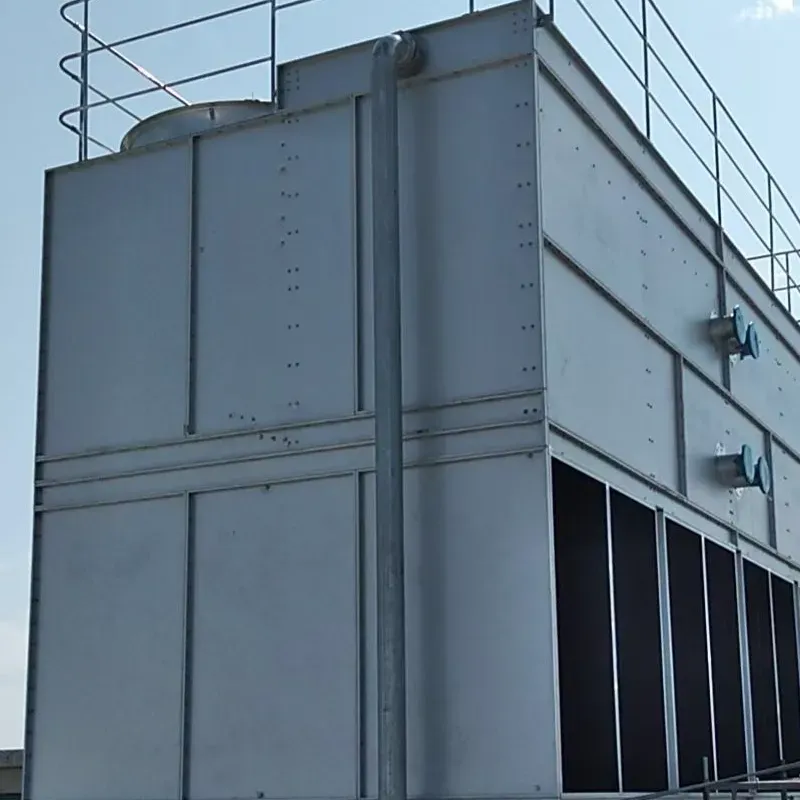
Classification by Draft Method: Natural vs Mechanical Draft
Cooling towers can also be classified based on how air is moved through the system.
Natural Draft Cooling Towers
These towers rely on natural convection (hot air rising) to create airflow. They are typically large, hyperbolic structures seen in power plants.
Advantages:
- No fan energy consumption
- Suitable for very large-scale operations
Limitations:
- High construction cost
- Not suitable for most HVAC applications
Mechanical Draft Cooling Towers
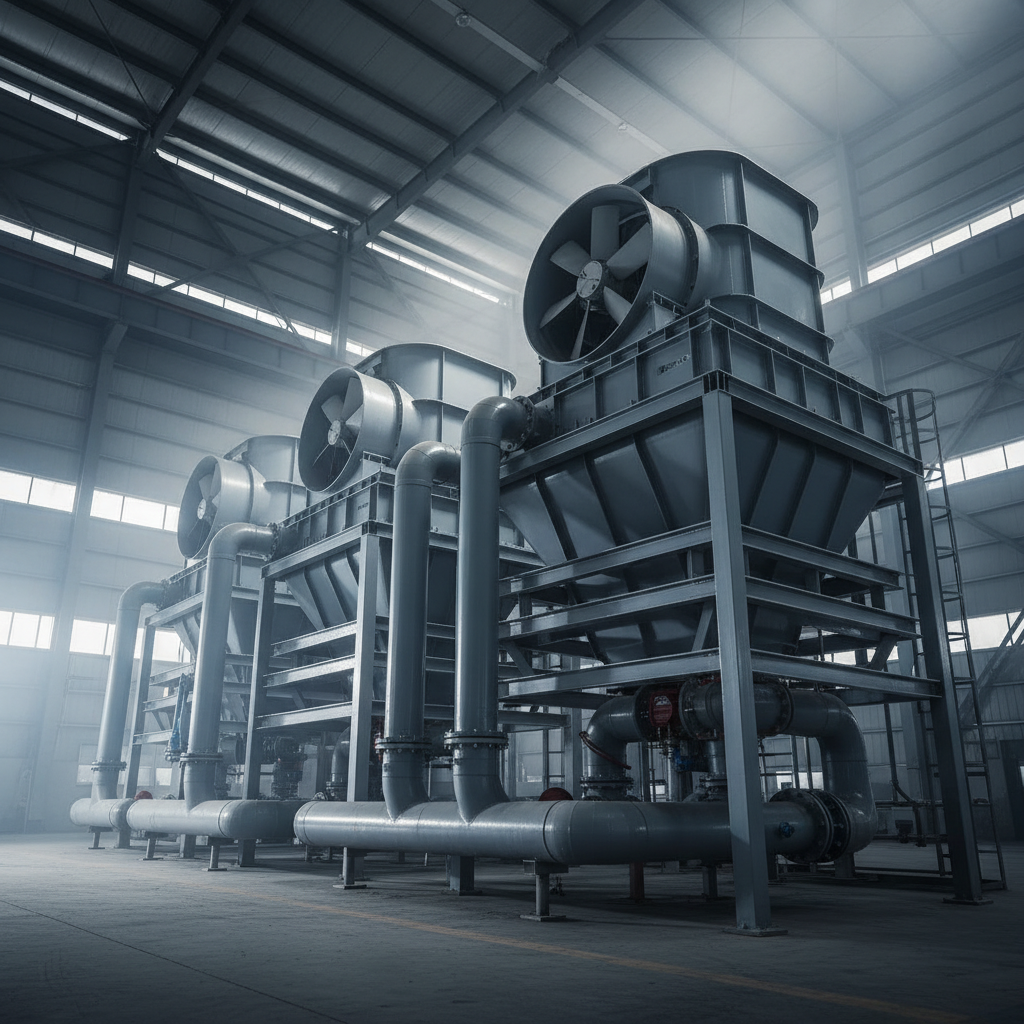
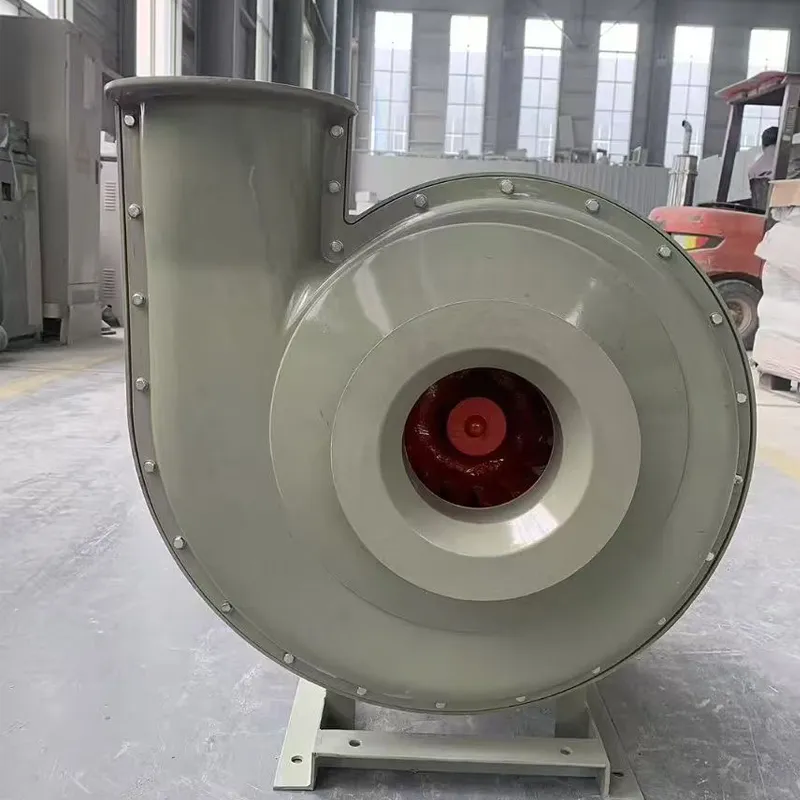
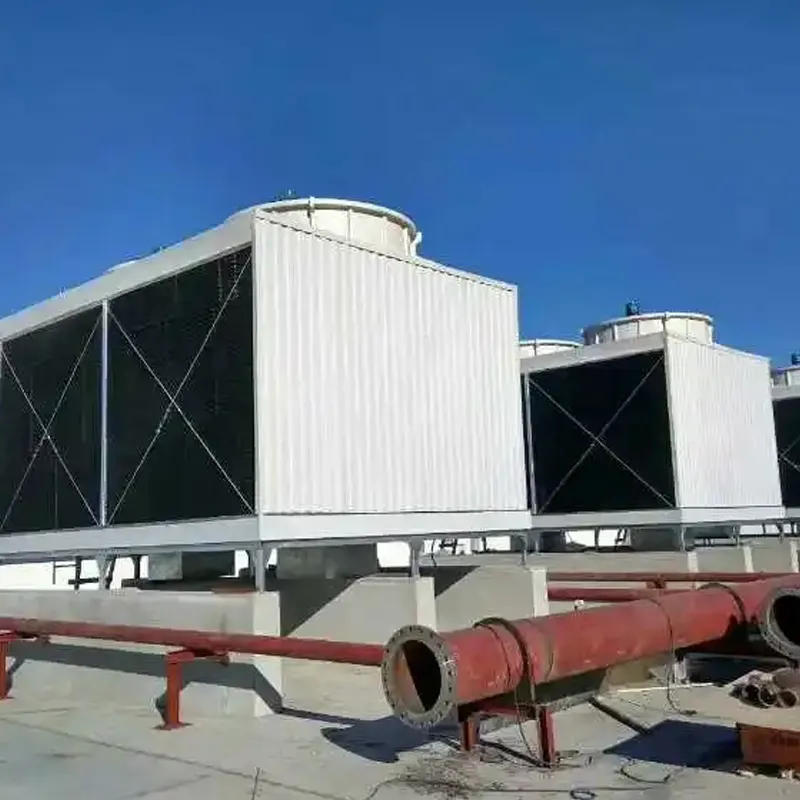
Mechanical draft towers use fans to control airflow and are the most common type in air conditioning systems.
They are further divided into:
- Induced Draft Towers: Fans located at the top pull air through the tower (most common)
- Forced Draft Towers: Fans at the base push air into the tower
Advantages:
- Compact and flexible
- Suitable for commercial HVAC systems
- Better control over performance
Classification by Construction Material
Material selection is increasingly important in modern cooling tower design.
Steel Cooling Towers
Traditional steel towers are strong but prone to corrosion, especially in humid or chemical environments. They require regular maintenance and protective coatings.
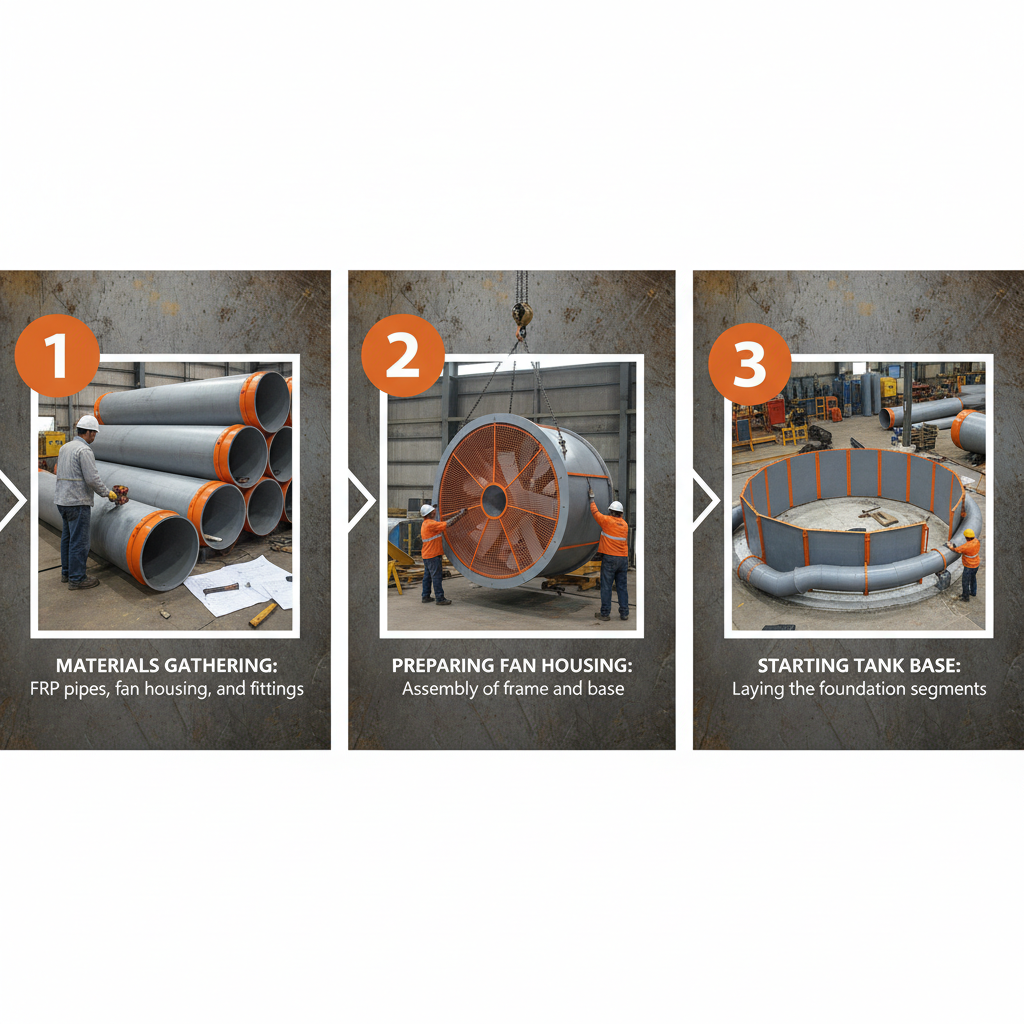
FRP Cooling Towers (Fiberglass Reinforced Plastic)
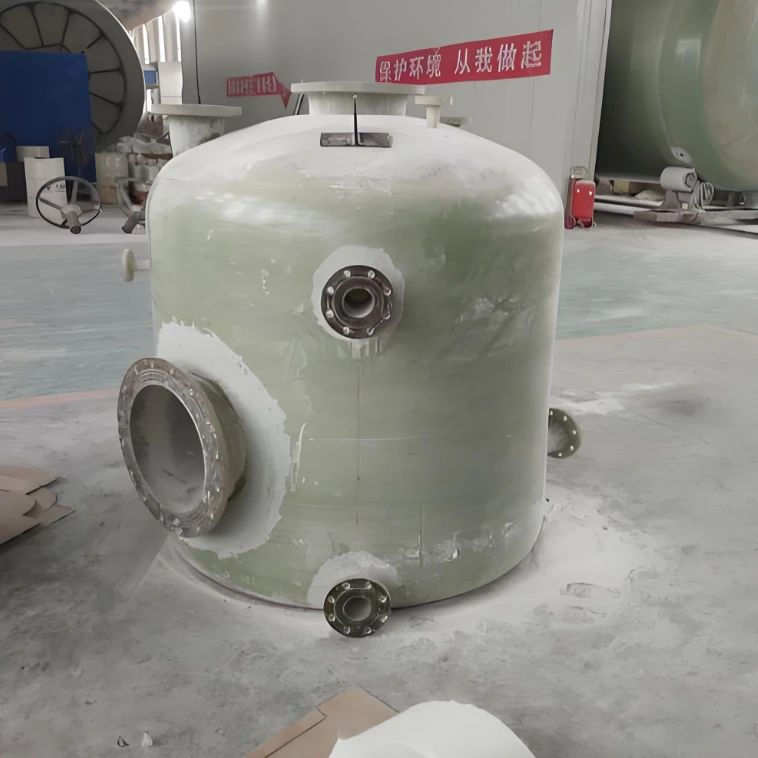
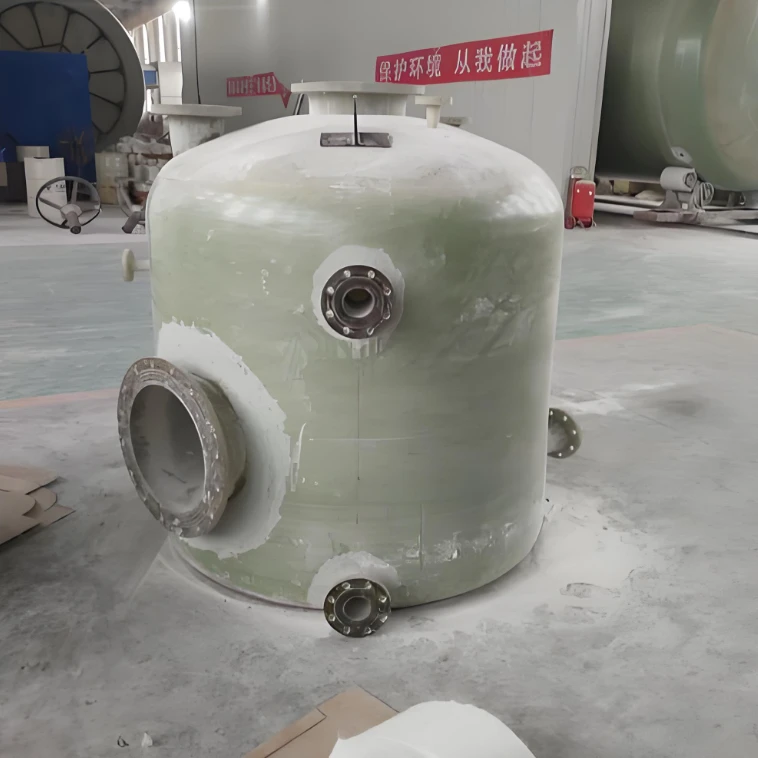
FRP has become the preferred material for modern ابراج تبريد التكييف.
Advantages:
- Excellent corrosion resistance
- Lightweight and easy to install
- Long service life
- Lower maintenance costs
👉 Leading manufacturers like Hebei Longxuan Environmental Protection Equipment Co., Ltd specialize in FRP cooling tower solutions, offering durable and energy-efficient systems tailored for HVAC applications.
Modular vs Traditional Cooling Towers
Another emerging trend is modular design.
Modular Cooling Towers
These systems consist of multiple smaller units working together.
Benefits:
- Easy scalability
- Flexible installation
- Reduced downtime during maintenance
Traditional Cooling Towers
Larger, single-unit systems that are suitable for fixed, high-capacity installations.
How to Choose the Right Type for Your HVAC System
When selecting among different types of cooling towers used in air conditioning systems, consider the following:
- Cooling capacity requirements
- Available installation space
- Water quality and environmental conditions
- Energy efficiency goals
- Maintenance capabilities and budget
For most commercial HVAC applications, mechanical draft, open circuit, counter flow FRP cooling towers offer the best balance of performance, cost, and durability.
خاتمة
There are several types of cooling towers used in air conditioning systems, each designed to meet different operational needs. From cross flow and counter flow designs to open and closed circuits, and from steel to advanced FRP materials, the right choice depends on your specific application.
As energy efficiency, durability, and sustainability become more important, modern ابراج تبريد التكييف—especially FRP-based solutions—are leading the way. By understanding these different types and their advantages, businesses can make informed decisions, optimize HVAC performance, and achieve long-term cost savings.






عنوان
20 Xingyuan South Street, Zaoqiang County, Hengshui City, Hebei Province, China


