


نحن مفتوحون 24 ساعة في اليوم، 7 أيام في الأسبوع، بما في ذلك عطلات نهاية الأسبوع والعطلات الرسمية.

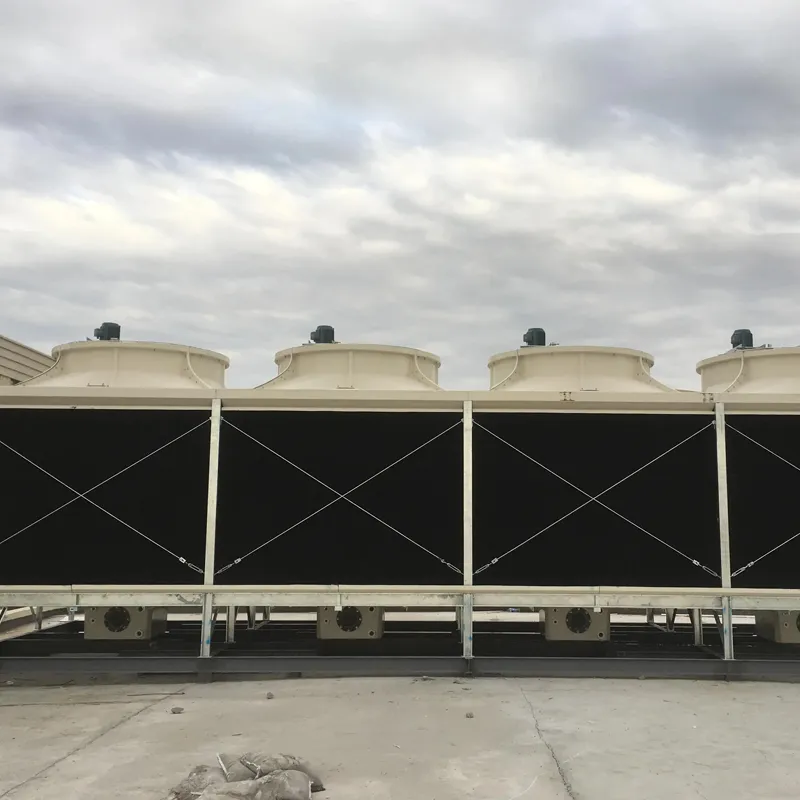
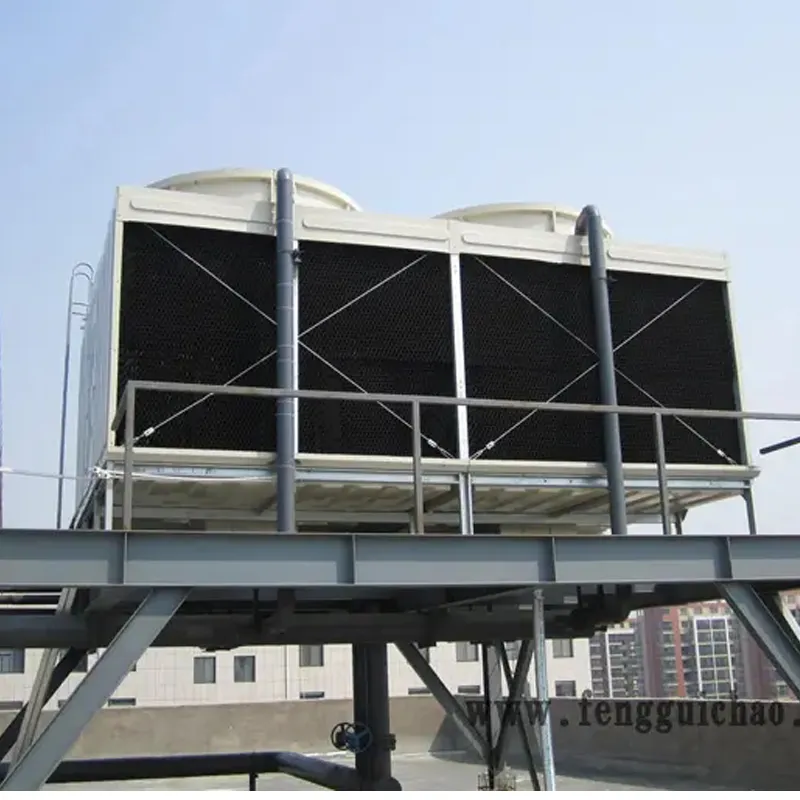
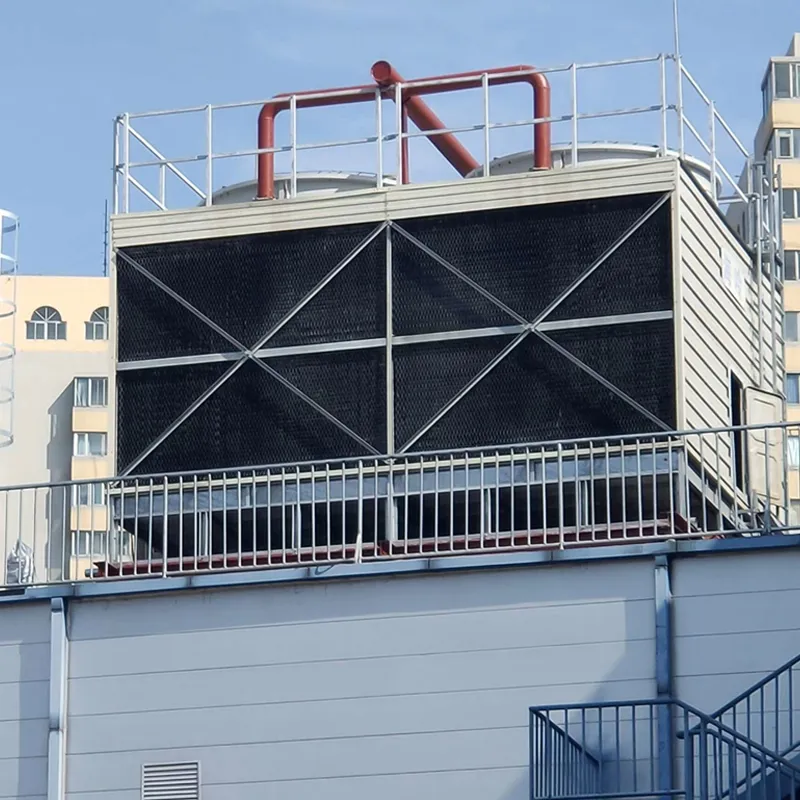
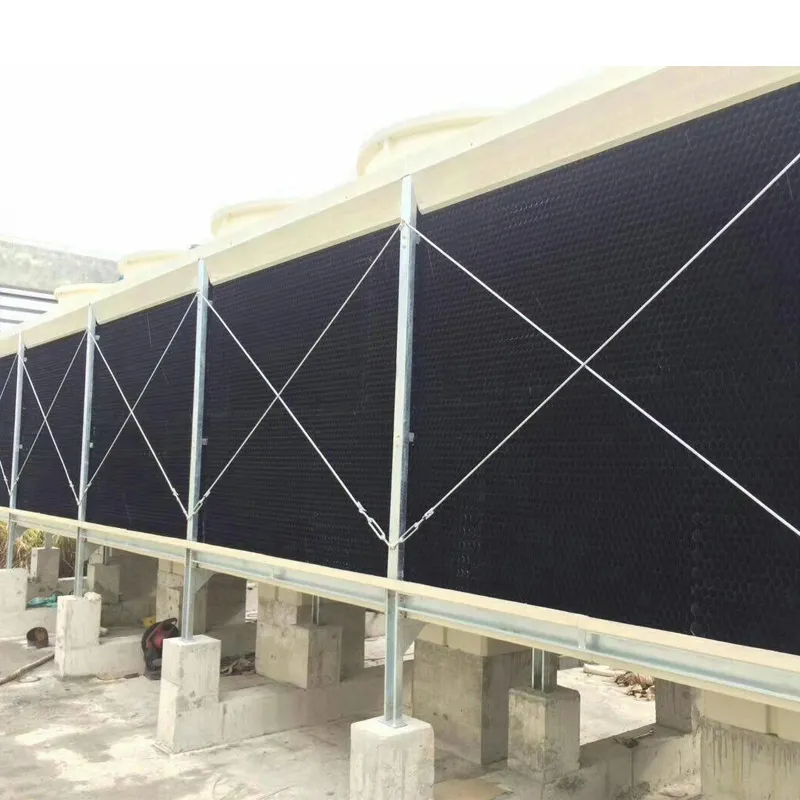
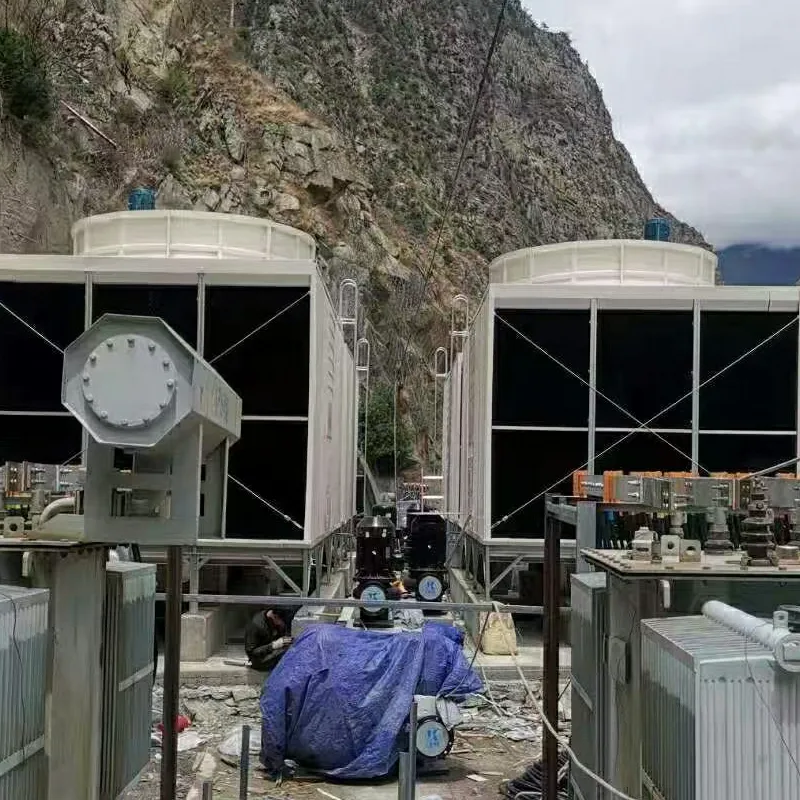
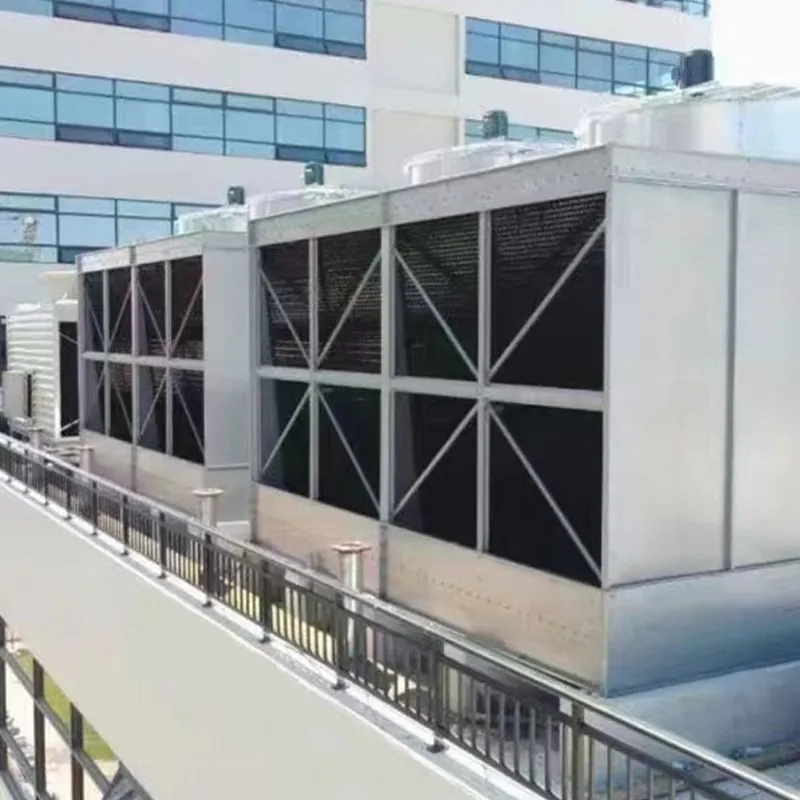
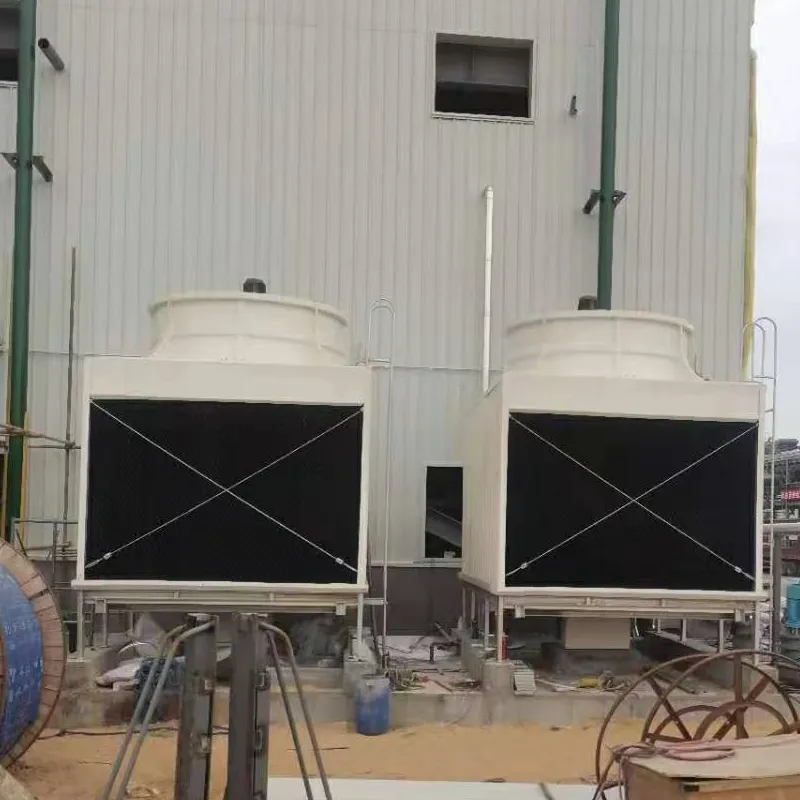
برج تبريد وتكييف
مقدمة تقنية لبرج تبريد تكييف الهواء
1. نظرة عامة
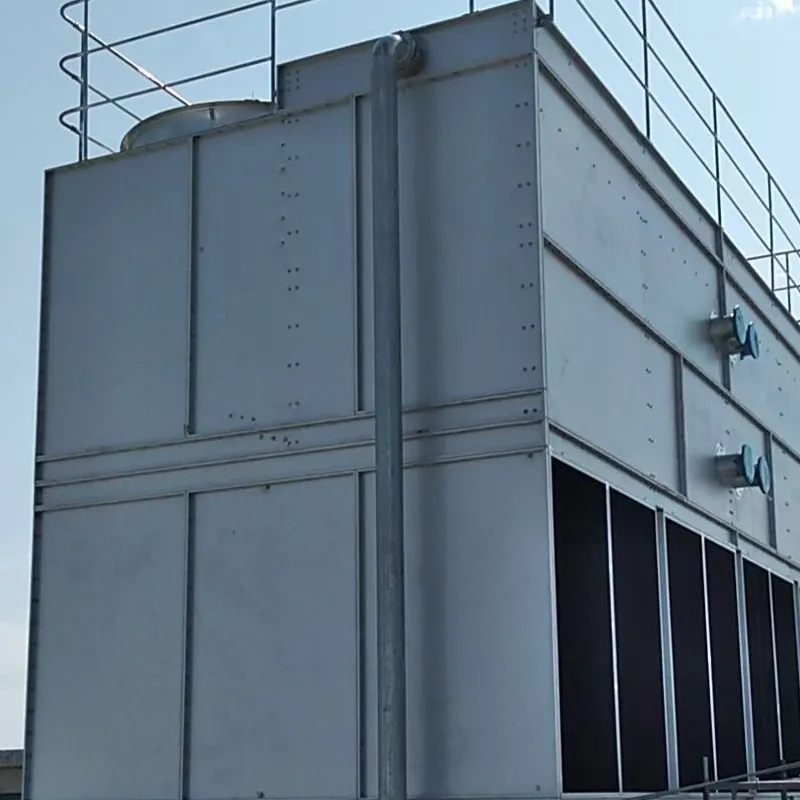
يعد برج تبريد تكييف الهواء مكونًا مهمًا لرفض الحرارة في أنظمة التدفئة والتهوية وتكييف الهواء المركزية، وهو مصمم لتبديد الحرارة المهدرة من المكثفات إلى الغلاف الجوي عبر التبريد التبخيري. فهو يضمن التشغيل الفعال لدورات التبريد ويستخدم على نطاق واسع في المباني التجارية (مثل المكاتب والمستشفيات والفنادق) والمرافق الصناعية (مثل مراكز البيانات). تشمل اعتبارات التصميم الرئيسية سعة المبرد، ودرجة حرارة اللمبة الرطبة المحيطة، والقيود المكانية.
2. مبدأ العمل
مدخل الماء الساخن: يدخل الماء الساخن (عادة 37 درجة مئوية) من مكثف المبرد إلى برج التبريد.
توزيع الماء: تقوم فوهات الرش بتوزيع الماء بالتساوي على وسائط التعبئة.
التبادل الحراري بين الهواء والماء: تعمل المراوح على دفع الهواء للتفاعل مع الماء في تكوينات التدفق المعاكس أو التدفق المتقاطع، مما يتيح التبريد بالتبخير.
عودة الماء المبرد: يتم إعادة تدوير الماء البارد (≈32 درجة مئوية) إلى المكثف.
3. أنواع أبراج التبريد
A cooling tower is essential components in HVAC and industrial systems, designed to remove heat efficiently through water circulation and evaporation. Understanding the different types of cooling towers helps businesses choose the right solution based on performance needs, installation conditions, and budget.
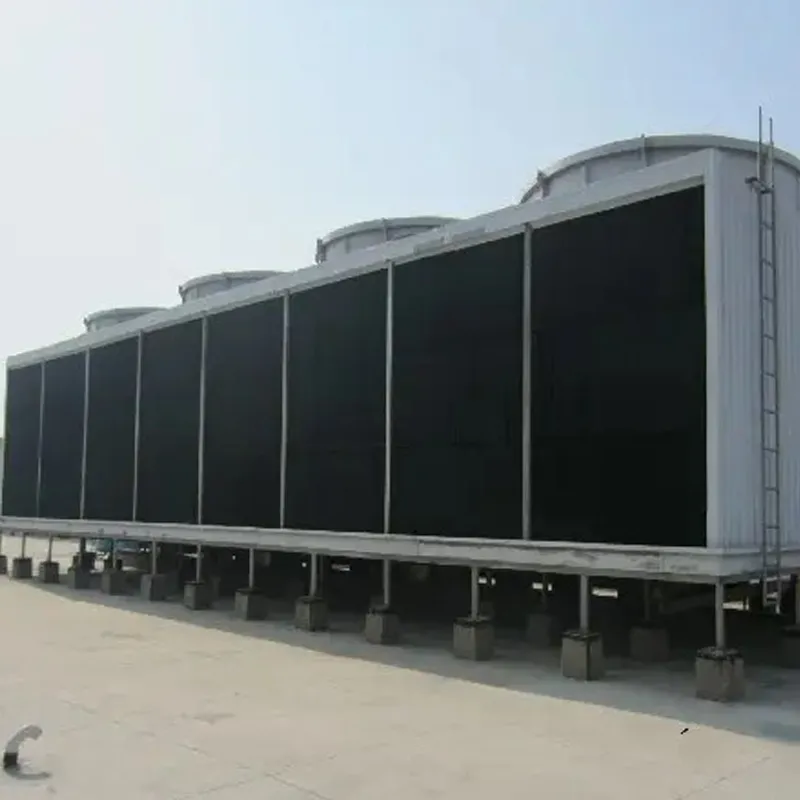
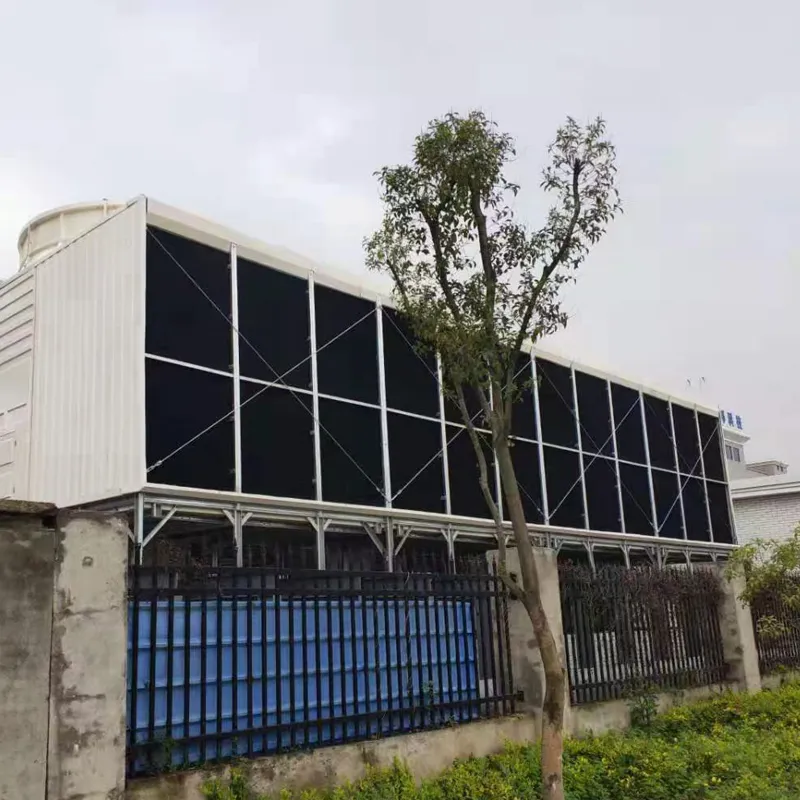
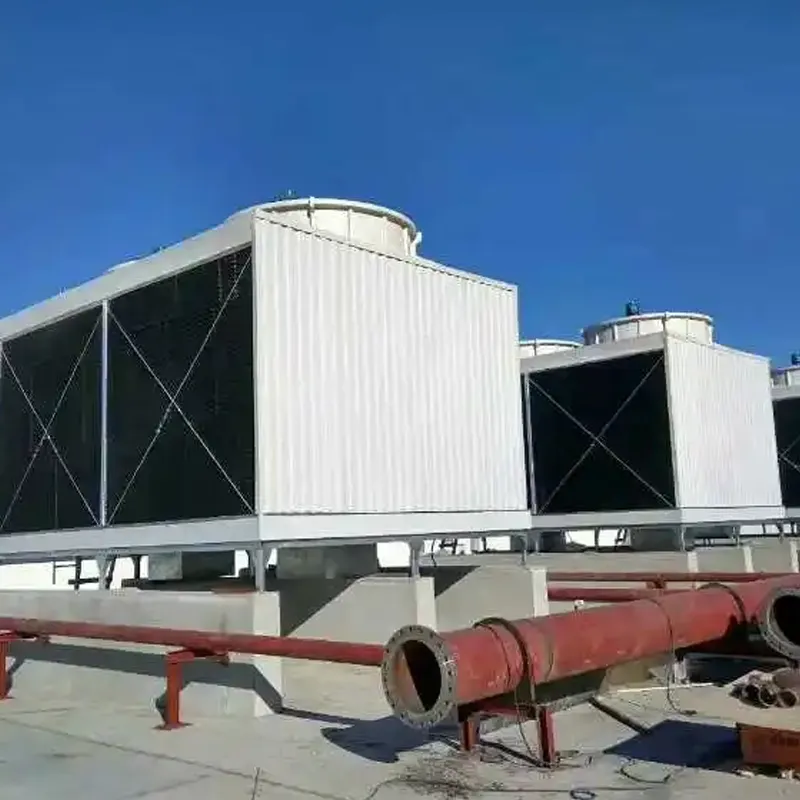
One of the most common classifications is based on airflow design, which includes cross flow و counter flow cooling towers. In cross flow towers, air moves horizontally across the falling water, allowing for a simpler structure and lower energy consumption. In contrast, counter flow towers force air to move upward against the downward flow of water, resulting in higher heat transfer efficiency and more compact designs. Counter flow systems are often preferred for applications requiring superior performance.
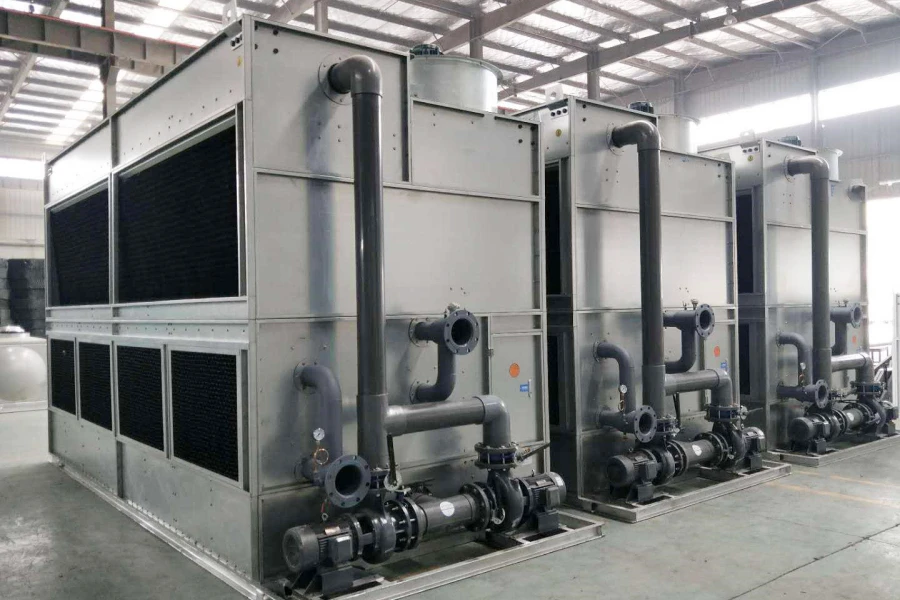
Cooling towers can also be categorized by their circuit design: open circuit و closed circuit cooling towers. Open circuit towers directly expose water to air, making them cost-effective and widely used in air conditioning cooling towers. Closed circuit towers, also known as fluid coolers, keep the process fluid enclosed within coils, reducing contamination and improving water quality control. These are ideal for systems where cleanliness is critical.
Another key classification is based on draft method، مشتمل natural draft و mechanical draft cooling towers. Natural draft towers rely on buoyancy-driven airflow and are typically used in large-scale power plants. Mechanical draft towers use fans to control airflow and are more common in commercial and industrial HVAC systems due to their flexibility and compact size.
Finally, cooling towers differ by construction materials, such as steel, concrete, and increasingly popular FRP (fiberglass reinforced plastic). FRP cooling towers offer excellent corrosion resistance, lightweight structure, and long service life, making them a preferred choice for modern applications.
In summary, selecting the right type of cooling tower depends on airflow design, circuit type, draft method, and material—each playing a crucial role in system efficiency and long-term performance.
4. المكونات الرئيسية والتصميم
4.1 المكونات الأساسية
وسائط التعبئة: وحدات PVC أو PP لزيادة مساحة الاتصال بالماء والهواء.
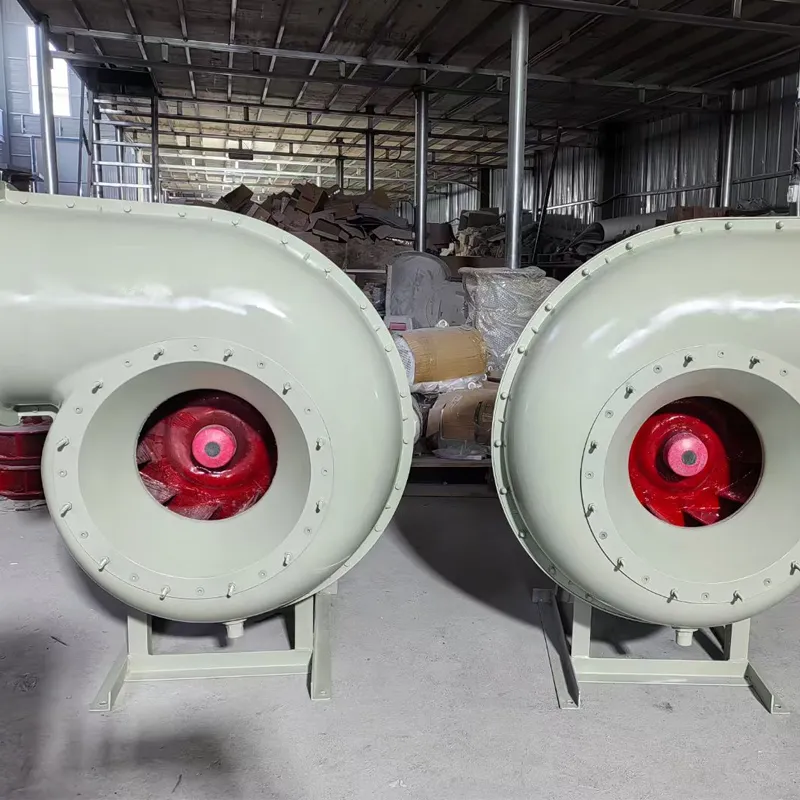
نظام المروحة: مراوح محورية/طاردة مركزية (على سبيل المثال، محرك بقدرة 7.5 كيلووات لبرج بقدرة 100 طن تبريد).
توزيع المياه: فوهات دوارة أو أنابيب رش ثابتة.
-مزيل الانجراف: يقلل من فقدان الماء (<0.001% معدل الانجراف).
الغلاف: FRP (مقاوم للتآكل) أو الفولاذ المجلفن (فعال من حيث التكلفة).
4.2 معلمات التصميم
قدرة التبريد (TR): 1 TR = 3.516 كيلووات؛ سعة البرج = 1.2–1.3× مبرد TR (لتعويض فقدان الحرارة).
درجة حرارة المصباح الرطب (WBT): خط الأساس للتصميم الحرج (على سبيل المثال، 28 درجة مئوية).
النهج: الفرق في درجة الحرارة بين الماء المبرد وWBT (عادةً 3-5 درجات مئوية).
5. إرشادات الاختيار والتكوين
5.1 صيغة التحجيم
تدفق مياه البرج (م³/ساعة) = \[ سعة المبرد (TR) × 3024 × 1.3 \] ÷ 5000
مثال: لمبرد 500 TR → ≈393 م³/ساعة.
6. كفاءة الطاقة والاستدامة
تقنيات توفير الطاقة:
تعمل محركات التردد المتغير (VFDs) على تقليل طاقة المروحة بنسبة 20-30%.
وسائط تعبئة عالية الكفاءة (نقل حرارة أعلى بنسبة 15%).
ميزات صديقة للبيئة:
FRP متوافق مع المبردات ذات القدرة المنخفضة على إحداث الاحترار العالمي (على سبيل المثال، R-1233zd).
التحكم في الضوضاء ≥65 ديسيبل (A) عند 1 متر (متوافق مع ASHRAE).
7. الصيانة واستكشاف الأخطاء وإصلاحها
الصيانة الروتينية:
أسبوعيًا: تحقق من مستوى الماء/الرقم الهيدروجيني (6.5-8.5).
شهريًا: قم بتنظيف وسائط التعبئة والمرشحات.
القضايا المشتركة:
كفاءة منخفضة: عمليات التعبئة المسدودة أو عدم توازن المروحة.
الضوضاء غير الطبيعية: تحمل الشفرات أو الشفرات السائبة.
8. التطبيقات النموذجية
المباني التجارية: المولات والمكاتب (200-1000 برج TR).
مراكز البيانات: تكوينات N+1 الزائدة عن الحاجة.
مرافق الرعاية الصحية: أبراج مغلقة للتحكم في التلوث.
9. مرجع التكلفة (اليوان الصيني)
السعة (TR) | النطاق السعري (10,000 يوان صيني) | ملاحظات |
100 TR | 8–15 | التدفق المعاكس FRP، التكوين القياسي. |
500 TR | 40–70 | مراوح VFD + أدوات تحكم ذكية. |
1,000 تر | 80–150 | تصميم وحدات للإعدادات المتوازية. |
10. المعايير والشهادات الدولية
ASHRAE 90.1: متطلبات كفاءة الطاقة.
EN 13053: الامتثال لنظام التهوية (الاتحاد الأوروبي).
شهادة LEED: اعتمادات في الحفاظ على المياه/الطاقة.
خاتمة
تعد أبراج تبريد تكييف الهواء أمرًا حيويًا لكفاءة نظام التدفئة والتهوية وتكييف الهواء (HVAC). تتناسب أبراج التدفق المعاكس مع المباني التجارية عالية الأداء، بينما تتفوق نماذج التدفق المتقاطع في التعديلات التحديثية المحدودة المساحة. إعطاء الأولوية لأنظمة المراقبة الذكية (التي تدعم إنترنت الأشياء) ومواءمة التصميمات مع أهداف WBT المحلية وأهداف الاستدامة.
للحصول على توصيات بشأن العلامة التجارية (على سبيل المثال، BAC، SPX، EVAPCO) أو المقارنات الفنية التفصيلية، حدد متطلبات مشروعك (المنطقة المناخية، الميزانية، وما إلى ذلك).
ما هو برج التبريد في نظام تكييف الهواء؟
برج التبريد في نظام تكييف الهواء عبارة عن جهاز لرفض الحرارة يزيل الحرارة الزائدة من المبرد أو حلقة المكثف عن طريق نقلها إلى الغلاف الجوي. تتضمن العملية تدوير الماء الدافئ من نظام التدفئة والتهوية وتكييف الهواء (HVAC) عبر وحدات تكييف برج التبريد، حيث يتم تبريده عن طريق التبخر قبل إعادته إلى النظام.
تساعد هذه الآلية في الحفاظ على كفاءة المبردات والضواغط والمكونات الأخرى في نظام برج التبريد المكيف، مما يقلل من استهلاك الطاقة ودرجات حرارة التشغيل.
ما هي وظيفة برج التبريد في نظام التبريد؟
الوظيفة الأساسية لبرج التبريد في نظام التبريد هي تبريد ماء التبريد الساخن القادم من المكثف، مما يضمن الأداء المستقر للنظام بأكمله. وبدون رفض الحرارة بشكل مناسب، تنخفض كفاءة عملية التبريد، مما يؤدي إلى ارتفاع درجة الحرارة وزيادة تكاليف الطاقة.
بعبارات بسيطة، برج التبريد في نظام التبريد:
يزيل الحرارة من المياه المتداولة
يحافظ على درجة حرارة المكثف المثالية
يدعم التشغيل المستمر للمبردات ووحدات التبريد
يمنع التحميل الزائد على النظام أو إيقاف تشغيله
الميزات الرئيسية لوحدات تكييف برج التبريد لدينا
✅ High-Efficiency Heat Exchange Coils – Designed for maximum surface contact and heat transfer.
✅ Corrosion-Resistant Materials – FRP or galvanized steel casing for durability in all climates.
✅ Low Noise Fans – Quiet axial fans reduce environmental noise in urban and commercial areas.
✅ Energy-Saving Motors – Equipped with variable frequency drives (VFDs) for reduced power usage.
✅ Easy Maintenance Access – Modular structure for quick inspection and servicing.
✅ Compact Footprint – Vertical design saves space while delivering powerful performance.
تطبيقات نظام برج التبريد AC
يتم استخدام نظام برج التبريد الخاص بنا في مجموعة واسعة من الصناعات، بما في ذلك:
المباني التجارية: مجمعات المكاتب والفنادق والمستشفيات ومراكز التسوق
المصانع الصناعية: الحقن، الإنتاج الكيميائي، محطات الطاقة
أنظمة التبريد: مستودعات التبريد، وحدات تجهيز الأغذية
مراكز البيانات: تبريد فعال لرفوف الخوادم وبيئات تكنولوجيا المعلومات
الاستخدام المؤسسي: الجامعات، ومعامل الأبحاث، والمرافق الحكومية
المواصفات الفنية لبرج تبريد تكييف الهواء
| المعلمة | مواصفة |
| سعة التبريد | 10 – 1000+ tons |
| مادة الغلاف | فرب / الصلب المجلفن / الفولاذ المقاوم للصدأ |
| مادة الحشو | وسائط تعبئة قرص العسل PVC / PP |
| نوع المروحة | محوري / الطرد المركزي |
| قوة المحرك | 1.5 kW – 75 kW (VFD optional) |
| معدل تدفق المياه | 10 – 2500 m³/h |
| مستوى الضوضاء | ≤ 60 dB(A) at 5m |
| مدخل/مخرج | ذات حواف أو مترابطة (قابلة للتخصيص) |
لماذا تختار برج التبريد الخاص بنا في نظام التبريد
✔️ Superior Heat Dissipation – Built to maintain efficient condenser performance even under peak load.
✔️ Energy Optimization – Reduces chiller load and power consumption, improving overall building energy rating.
✔️ Long Service Life – Weather-resistant design and premium-grade bearings extend product life up to 15-20 years.
✔️ Flexible Integration – Easily connects to all standard chillers and cooling tower in refrigeration system setups.
✔️ Global Supply Chain – Quick delivery and spare part availability across the US, EU, Middle East, and Asia-Pacific.
هل أنت مستعد لترقية نظام التبريد لديك؟
دعنا نساعدك في تصميم وحدات تكييف برج التبريد الأكثر كفاءة لمشروعك. سواء كان الأمر يتعلق ببناء جديد أو تعديل الأنظمة الحالية، سيضمن فريقنا الهندسي أن الحل يلبي احتياجات الأداء والميزانية والتركيب لديك.
How Cooling Towers Work in Commercial HVAC Systems
In large-scale commercial buildings, a hvac system cooling tower plays a critical role in maintaining efficient temperature control. Unlike residential air conditioners that release heat directly into the air, commercial HVAC systems rely on cooling towers to remove heat from circulating water and improve overall energy efficiency.
At the core of the process, warm water from the condenser in the HVAC system is pumped into the ac cooling tower. Inside the tower, this water is distributed over fill media, which increases the surface area and enhances heat exchange. As air flows through the tower—either naturally or with the help of fans—it causes a small portion of the water to evaporate. This evaporation process removes heat from the remaining water, effectively cooling it down.
The cooled water is then recirculated back into the HVAC system to absorb more heat from the building. This continuous cycle allows the system to handle large cooling loads, making it ideal for commercial spaces such as office buildings, shopping malls, and hospitals.
A well-designed hvac system cooling tower not only improves cooling performance but also significantly reduces energy consumption compared to air-cooled systems. Additionally, modern ac cooling tower designs often incorporate advanced materials like FRP (fiberglass reinforced plastic), which offer superior corrosion resistance, longer service life, and lower maintenance requirements.
In summary, cooling towers act as the backbone of commercial HVAC systems by efficiently removing heat through evaporation. Their ability to handle high thermal loads while maintaining energy efficiency makes them an essential component in modern building climate control solutions.
Why Cooling Towers Are Essential in Air Conditioning Systems
Air conditioning cooling towers play a critical role in maintaining the efficiency and stability of modern HVAC systems, especially in large commercial and industrial environments. Unlike small standalone cooling systems, central air conditioning systems generate a significant amount of heat during operation. Without an effective method to remove this heat, the entire system would quickly lose efficiency, consume more energy, and face potential equipment failure. This is where cooling tower AC units become indispensable.
At their core, air conditioning cooling towers are designed to dissipate heat by transferring it from water to the atmosphere through evaporation. In a typical HVAC setup, warm water from the condenser is circulated into the cooling tower, where it is cooled before being reused in the system. This continuous heat exchange process ensures that the air conditioning system can operate at optimal temperatures, improving overall performance and reducing energy consumption.
Another key reason cooling tower AC units are essential is their impact on energy efficiency. By effectively removing heat, these systems reduce the workload on chillers and compressors, which are among the most energy-intensive components in HVAC systems. As a result, businesses can achieve lower operating costs and improved sustainability performance—an increasingly important factor in modern building management.
In addition, air conditioning cooling towers contribute to system longevity and reliability. By preventing overheating and minimizing thermal stress on critical components, they help extend the lifespan of equipment and reduce the frequency of maintenance or unexpected downtime. This is particularly important for facilities such as hospitals, data centers, and large office buildings, where consistent climate control is crucial.
In summary, cooling tower AC units are not just an optional component but a fundamental part of efficient air conditioning systems. Their ability to enhance performance, reduce energy use, and ensure long-term reliability makes them essential for any large-scale HVAC application.
FRP Cooling Tower vs Steel Cooling Tower
When selecting a cooling tower for HVAC or industrial applications, the choice between FRP (fiberglass reinforced plastic) and steel significantly impacts long-term performance, maintenance cost, and system reliability. While steel cooling towers have been widely used in the past, modern air conditioning systems increasingly favor FRP cooling towers due to their superior durability and lifecycle value.
1. Corrosion Resistance and Lifespan
One of the most critical differences lies in corrosion resistance. Steel cooling towers—especially galvanized steel—are highly susceptible to rust, chemical attack, and environmental degradation over time. In contrast, FRP cooling towers are inherently corrosion-resistant and can withstand exposure to moisture, chemicals, and harsh weather without structural damage .
As a result, FRP towers typically achieve a longer service life, often exceeding 15–20 years, while steel units require frequent repairs or replacement in aggressive environments .
👉 For buyers: This means lower lifecycle cost and higher ROI with FRP.
2. Maintenance and Operating Costs
Steel cooling towers demand continuous maintenance, including anti-corrosion coatings, inspections, and part replacements. Over time, these hidden costs can exceed the initial savings of steel units.
FRP cooling towers, on the other hand, feature smooth, non-reactive surfaces that resist scaling and biofilm buildup, significantly reducing maintenance requirements and downtime .
👉 Conclusion: FRP = lower maintenance + lower long-term operating cost.
3. Weight, Installation, and Structural Benefits
FRP cooling towers are much lighter than steel structures, often reducing installation labor by up to 30% and lowering structural load requirements . Their modular design also simplifies transportation and on-site assembly.
Steel towers are heavier, require stronger foundations, and involve more complex installation processes.
👉 Result: Faster installation and lower project cost with FRP.
4. Performance and Energy Efficiency
Modern FRP cooling towers are engineered with optimized airflow and water distribution systems, improving heat exchange efficiency while reducing energy consumption .
Steel towers can deliver similar performance initially, but efficiency often declines over time due to corrosion, scaling, and structural wear.
5. Application Suitability
FRP Cooling Towers: Ideal for HVAC systems, commercial buildings, chemical plants, coastal environments, and industries with corrosive conditions
Steel Cooling Towers: Suitable for certain high-temperature or fire-sensitive environments where metal structures are required
Why Choose Hebei Longxuan Environmental Protection Equipment Co., Ltd
When it comes to high-performance FRP cooling solutions, Hebei Longxuan Environmental Protection Equipment Co., Ltd stands out as a reliable manufacturer specializing in air conditioning cooling towers.
Their FRP cooling towers offer:
Advanced corrosion-resistant fiberglass structure for long-term durability
Optimized thermal performance design to improve cooling efficiency
Lightweight modular construction for easy installation and reduced labor cost
Low-noise and energy-saving operation, ideal for modern HVAC systems
Customizable solutions tailored for commercial and industrial applications
By combining high-quality materials with mature manufacturing technology, Longxuan delivers cooling towers that not only outperform traditional steel units but also align with current trends in energy efficiency, sustainability, and low maintenance.
How to Choose the Right Air Conditioning Cooling Tower
Choosing the right air conditioning cooling tower is a critical decision that directly affects the performance, energy efficiency, and lifespan of your HVAC system. With various designs and specifications available, buyers need to evaluate several key factors to ensure the cooling tower matches their specific application requirements.
First, determine the cooling capacity and heat load of your system. This is the foundation of proper selection. The cooling tower must be capable of handling the total heat rejection from your chiller or condenser. Oversized units can lead to unnecessary costs, while undersized towers will struggle to maintain system efficiency and may cause overheating.
Second, consider the type of cooling tower that best fits your project. For most HVAC applications, open circuit towers are commonly used due to their efficiency and cost-effectiveness. However, closed circuit cooling towers may be more suitable for systems requiring cleaner water or reduced contamination. Additionally, comparing cross flow and counter flow designs can help optimize performance based on space and efficiency requirements.
Material selection is another crucial factor. Modern air conditioning cooling towers made from FRP (fiberglass reinforced plastic) offer superior corrosion resistance, lightweight structure, and lower maintenance compared to traditional steel towers. This makes them especially suitable for long-term operation in demanding environments.
Energy efficiency should also be a priority. Look for cooling towers with optimized fan systems, efficient water distribution, and low drift loss. High-efficiency designs reduce the workload on cooling tower AC units and help lower overall energy consumption, which is essential for both cost savings and environmental compliance.
Finally, evaluate installation conditions and maintenance requirements. Consider available space, noise restrictions, climate conditions, and ease of access for servicing. A well-designed cooling tower should not only perform efficiently but also be easy to maintain over its lifecycle.
In summary, selecting the right cooling tower involves balancing performance, efficiency, material quality, and application needs. By carefully assessing these factors, businesses can ensure reliable operation and maximize the return on investment for their HVAC systems.
برج التبريد في نظام التبريد
برج تبريد التيار المتردد
نظام التكييف لبرج التبريد
أبراج التبريد التكييف
وظيفة برج التبريد في نظام التبريد

ماذا يقول عملاؤنا عن برج تبريد مكيف الهواء

Air Conditioning Cooling Tower FAQ
-
س: ما هو برج تبريد تكييف الهواء؟
ج: تم تصميم برج تبريد مكيف الهواء لطرد الحرارة الزائدة من أنظمة تكييف الهواء، مما يضمن أداء تبريد فعال.
-
س: أين تستخدم عادة أبراج تبريد تكييف الهواء؟
ج: تستخدم هذه الأبراج في المباني الكبيرة والمجمعات التجارية والمنشآت الصناعية المزودة بأنظمة التكييف المركزي.
-
س: ما هي مزايا استخدام برج تبريد تكييف الهواء؟
ج: إنها تعمل على تحسين كفاءة استخدام الطاقة، وتقليل تكاليف التشغيل، وإطالة عمر أنظمة التدفئة والتهوية وتكييف الهواء (HVAC).
-
س: كيف يساعد برج تبريد مكيف الهواء في أداء نظام التدفئة والتهوية وتكييف الهواء (HVAC)؟
ج: من خلال رفض الحرارة بكفاءة، فإنها تضمن أن أنظمة تكييف الهواء تعمل بالسعة المثلى، حتى في ظل متطلبات التبريد العالية.



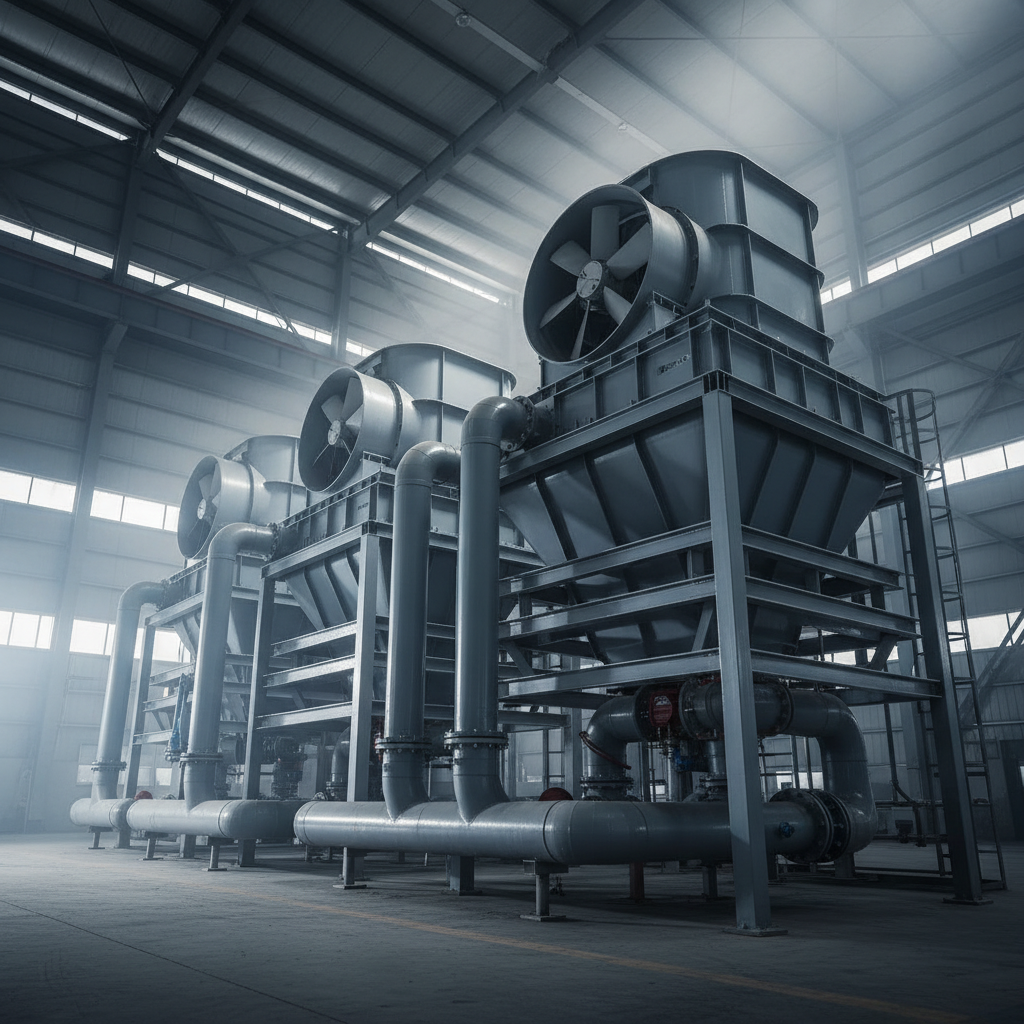
Apr 16,2026
Professional Guide to Effective Cooling Tower Treatment Strategies
Maintaining industrial cooling systems is critical for operational efficiency and equipment longevity. A professional cooling tower treatment strategy is not just about cleaning; it is about preventing scale buildup, corrosion, and the growth of harmful microorganisms. Without proper management, these systems can suffer from reduced heat transfer efficiency, leading to higher energy costs and potential system failures. In this guide, we will explore the essential components of water treatment, the chemistry involved, and how to optimize your cooling tower for maximum performance and sustainability.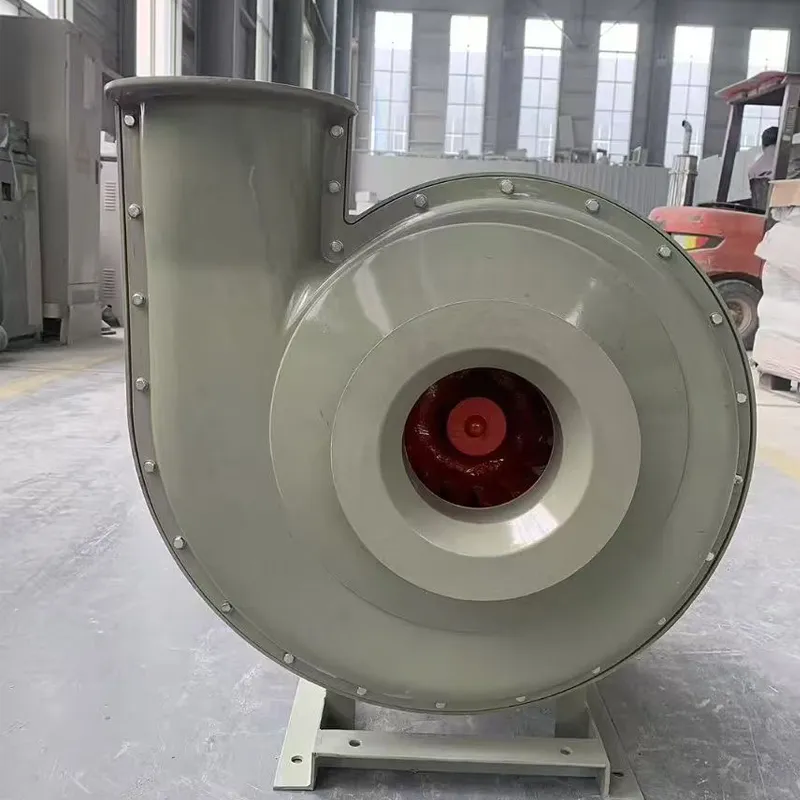


عنوان
20 Xingyuan South Street, Zaoqiang County, Hengshui City, Hebei Province, China


