


We Are Open 24 Hours a Day, 7 Days a Week, Including Weekends and Public Holidays.

FRP Pipe FAQ: Specifications, Ordering and Support Questions
QUESTIONS & ANSWERS
FRP Pipe FAQ: Specifications, Ordering and Support Questions
This FAQ answers the most common buyer questions about FRP pipe — from what it is and how it is made, to available specifications, application suitability, relevant standards, connection methods, and installation guidelines. Every answer is grounded in documented product data from Hebei Longxuan Environmental Protection Equipment Co., LTD., covering the standard, epoxy, and insulation variants of their fiberglass reinforced plastic pipe range.

What Is FRP Pipe and How Is It Made?
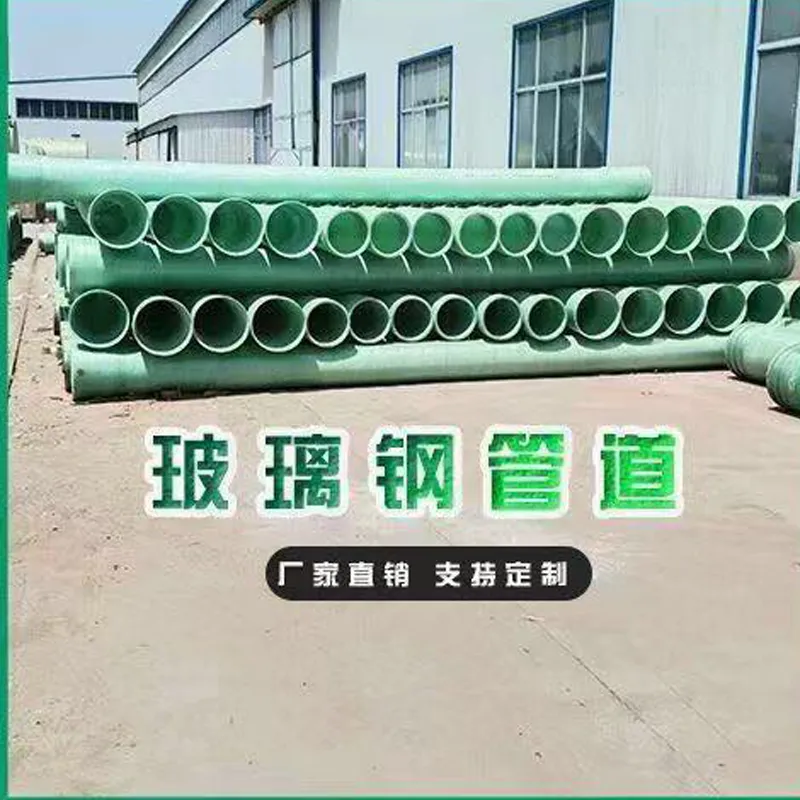
FRP stands for Fiberglass Reinforced Plastic. These composite pipes are built from glass fiber reinforcements embedded in a thermosetting resin matrix — epoxy, polyester, or vinyl ester — combining high tensile strength, corrosion resistance, and low weight in a single product.
Three main manufacturing processes are used:
- Filament Winding: Continuous glass fibers wound at precise angles; preferred for high-pressure applications.
- Centrifugal Casting: Produces uniform wall thickness; well suited for large-diameter pipes.
- Pultrusion: Enables continuous production of standard profiles, typically for smaller diameters.
Every pipe has a layered construction: a resin-rich inner liner (sometimes containing graphite for abrasion resistance), a structural glass fiber/resin wall, and an outer UV-resistant gel coat or resin layer.
What Diameter and Pressure Ratings Are Available?
Hebei Longxuan's FRP pipe product range covers a wide span of sizes and pressure classes:
- Outer diameter: 50 mm – 6000 mm
- Nominal diameter: DN 25 – DN 4000 (1" – 157")
- Pressure rating: PN 6 – PN 25 standard; customisable to PN 40
- Temperature range: −40 °C to 120 °C (epoxy resin); up to 180 °C (special resin systems)
For requirements outside these ranges, contact the technical team to discuss custom fabrication options.
Which Industries and Applications Are These Pipes Suitable For?
The material is used wherever corrosion resistance, low weight, or long service life are priorities:
| Industry | Typical Use Cases |
|---|---|
| Water & Wastewater | Water supply, sewage lines, desalination, sewage treatment |
| Chemical Processing | HCl and H₂SO₄ transfer, chlor-alkali solutions, solvent recovery |
| Oil & Gas | Brine injection, firewater systems, produced water handling |
| Power Generation | FGD systems, ash handling, cooling water circuits |
| Irrigation & Agriculture | Irrigation systems, cooling water circulation |
| Building & Construction | Building drainage, mine drainage |
| Pharmaceutical & Food | Pharmaceutical pipelines, food and beverage industry pipelines |
How Does This Material Compare to Steel and PVC?
| Parameter | FRP | Steel | PVC |
|---|---|---|---|
| Corrosion Resistance | Excellent | Poor (requires coating) | Good (mild chemicals only) |
| Density | 1.8 g/cm³ | 7.8 g/cm³ | 1.4 g/cm³ |
| Installation Cost | Low (no welding) | High (labour + coating) | Moderate |
| Documented Lifespan | 50+ years | 15–25 years | 20–30 years |
| pH Resistance | 2–12 (standard) | Limited | Limited |
At approximately one-quarter the weight of steel, these pipes still deliver tensile strength of ≥250 MPa. The smooth bore — Hazen-Williams C-factor of 150 versus 100 for steel — reduces friction losses in fluid transport systems.
What Is the Difference Between Standard and Epoxy FRP Pipe?
Both share composite construction, but the resin system determines performance limits:
Standard FRP pipe uses polyester, vinyl ester, or epoxy resin depending on the application. It handles pH 2–12 and temperatures up to 120 °C (180 °C with special resins), with tensile strength ≥250 MPa.
Epoxy FRP pipe uses premium bisphenol-A or novolac epoxy resin, extending chemical resistance to pH 1–14 — including 98% sulfuric acid and 50% sodium hydroxide. Tensile strength rises to ≥300 MPa and flexural strength to ≥250 MPa. Continuous operating temperature reaches 150 °C. The ultra-smooth interior (Ra ≤5 μm, C=150) delivers approximately 25% lower friction loss than steel.
Epoxy grade is the preferred choice for aggressive chemical environments, offshore platforms, and potable water systems.
What Standards and Certifications Apply?
The following standards are referenced in the product documentation:
- ASTM D2996 – Filament-wound FRP pipes
- ISO 14692 – FRP piping for petroleum/natural gas industries
- AWWA C950 – Water transmission and distribution
- EN 14364 – Underground drainage and sewerage
- ASTM D2996/D2997 – Epoxy FRP pipe manufacturing
- NSF/ANSI 61 – Potable water contact (epoxy grade)
- DNV-GL – Marine applications (epoxy grade)
Buyers should confirm which standards apply to their project before ordering.
What Connection Methods Are Available?
- Flanged Joints — ANSI/ASME B16.5 or DIN; suitable where maintenance access is needed.
- Bell & Spigot — Rubber gasket-sealed for leak-free underground assembly.
- Threaded/Coupled — Used for small-diameter industrial piping.
The appropriate method depends on operating pressure, diameter, and whether the system needs to be opened for maintenance.
What Are the Handling and Installation Guidelines?
- Handling: Use nylon slings to avoid surface damage; avoid direct contact with heavy machinery.
- Support spacing: DN 100 requires supports every 2.5–3.0 m; DN 500 requires supports every 4.0–5.0 m.
- Inspection: Annual checks for surface cracks and joint leaks are recommended. Ultrasonic testing is advised for critical systems.
No welding is required during installation, which reduces labour costs relative to steel systems.
What Is the Expected Service Life and Maintenance Requirement?
A service life of 50 years or more is available for FRP pipes used in harsh environments. No cathodic protection or protective coatings are required. Annual visual inspection is the primary ongoing maintenance task. The UV-resistant outer layer protects above-ground installations from environmental degradation.
On a lifecycle cost basis, the product documentation notes 40–70% savings over 20 years compared to steel, driven mainly by reduced maintenance.
Does Hebei Longxuan Offer an FRP Insulation Pipe Variant?
Yes. The FRP Insulation Pipe is a composite piping system with an added thermal insulation layer. It is specified when maintaining fluid temperature is a core requirement, including:
- Oil and gas pipelines
- Chemical and industrial fluid transport
- Hot water and steam distribution
- Marine and offshore piping systems
- Power plant cooling systems
The smooth inner surface maintains high flow efficiency, and the insulation layer handles both hot and cold service. Diameters, lengths, and insulation thicknesses are customisable to project needs.
THE PEOPLE

About the author
THE COMPANY
Hebei Longxuan Environmental Protection Equipment Co., LTD.
Hebei Longxuan Environmental Protection Equipment Co., Ltd: Your Premier Provider of FRP Products.Hebei Longxuan Environmental Protection Equipment Co., Ltd is strategically located in Hebei, China. We are a professional enterprise dedicated to the research, development, production, and sales of fiberglass reinforced plastic (FRP) products is a leading manufacturer and exporter in the field of fiberglass reinforced plastic (FRP) products.Our extensive product line includes cooling towers, pipelines, FRP gratings,…
About Us ↗Visit company website ↗YOUR NEXT STEP
Bring your brief. Start a useful conversation.
Use case, specification, quantity and delivery window: make the next conversation specific.







Address
20 Xingyuan South Street, Zaoqiang County, Hengshui City, Hebei Province, China


