Understanding frp water tank price is crucial in today’s world, where access to clean and safe water is a fundamental human right and a cornerstone of public health and economic development. The escalating demand for water storage solutions, coupled with the need for durable, cost-effective, and environmentally sound options, makes a detailed understanding of frp water tank price essential for engineers, policymakers, and end-users alike. This knowledge empowers informed decision-making, optimizes infrastructure investments, and ultimately contributes to a more sustainable future.
Globally, the market for water storage tanks is experiencing substantial growth, driven by factors such as rapid urbanization, industrial expansion, and increasing awareness of water conservation. According to a report by Market Research Future, the global water tank market is projected to reach USD 34.6 billion by 2030, with a CAGR of 5.8% during the forecast period. This growth is particularly pronounced in developing countries, where investments in water infrastructure are critical to meeting the needs of a growing population. Understanding the intricacies of frp water tank price enables efficient budgeting and resource allocation.
FRP (Fiber Reinforced Polymer) water tanks have emerged as a leading solution for water storage due to their superior properties compared to traditional materials like concrete or steel. These tanks offer high strength-to-weight ratios, corrosion resistance, and design flexibility, making them ideal for a wide range of applications. Analyzing frp water tank price allows for comparisons with alternatives and informed selection based on specific project requirements and long-term cost considerations.
Introduction to frp water tank price
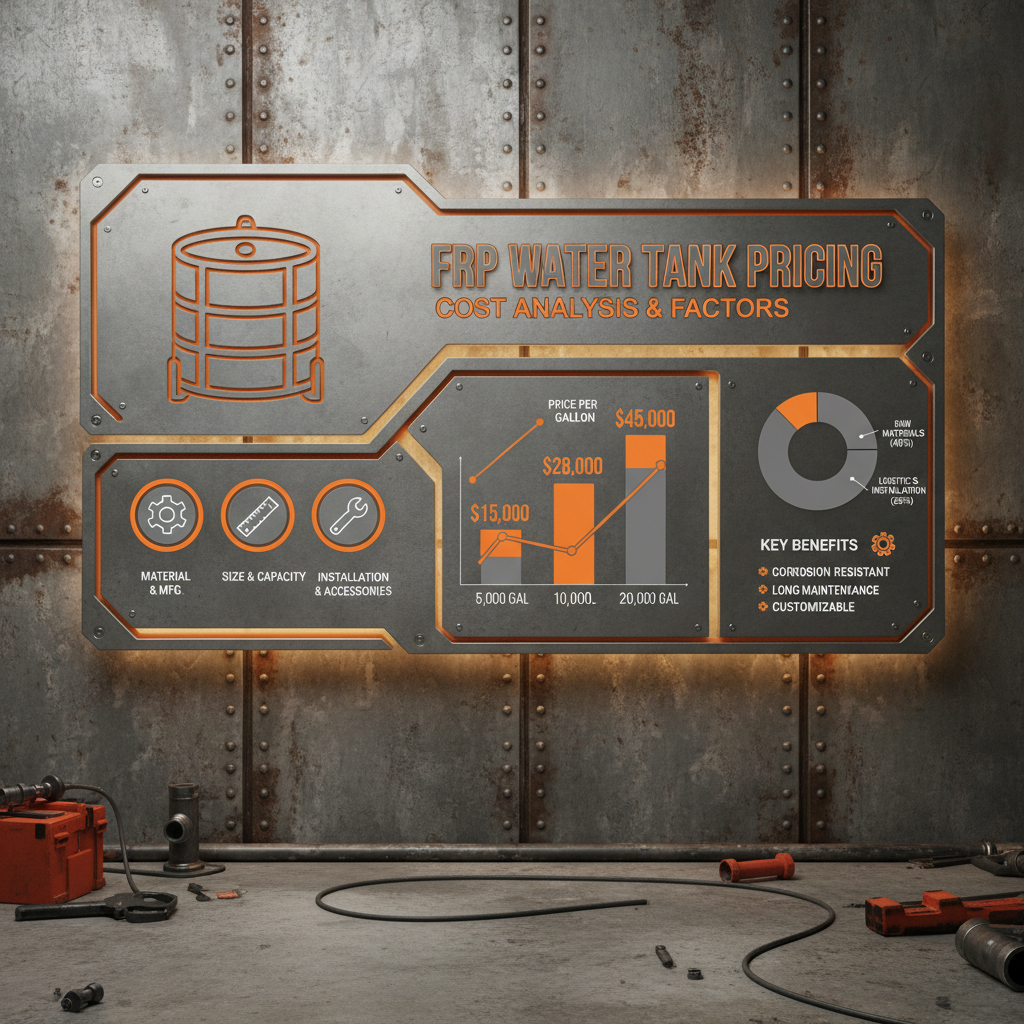
The cost of an frp water tank is determined by a complex interplay of factors, ranging from the raw material prices (resin, fiber reinforcement) and manufacturing processes to the tank's size, shape, and specific design requirements. Understanding these components is crucial for accurate budgeting and cost analysis. The frp water tank price isn't just an initial investment; it represents the total lifecycle cost, including installation, maintenance, and longevity.
Effective cost management in frp water tank procurement involves a thorough evaluation of different suppliers, material grades, and customization options. Optimizing these aspects can significantly reduce the overall expense without compromising the tank's performance or durability. Furthermore, considering the long-term benefits – such as reduced corrosion maintenance and extended service life – reinforces the value proposition of investing in a quality frp water tank, even if the upfront frp water tank price is slightly higher than alternative options.
Defining frp water tank price
frp water tank price encompasses all costs associated with acquiring and implementing a water storage solution constructed from fiber-reinforced polymer materials. This includes not only the manufacturing cost of the tank itself but also supplementary expenses like design and engineering, transportation, installation, and any necessary accessories such as inlets, outlets, and level sensors. A comprehensive frp water tank price quotation will typically itemize each of these components for transparency.
The ‘price’ isn’t simply a monetary value; it represents a trade-off between initial investment and long-term operational costs. While a cheaper initial frp water tank price might seem attractive, it could translate into higher maintenance expenses due to lower material quality or inadequate corrosion protection. A well-defined frp water tank price takes into account the total cost of ownership over the tank’s anticipated lifespan.
In the modern context, frp water tank price is increasingly linked to sustainability considerations. The environmental impact of both the materials used and the manufacturing processes is gaining prominence. Eco-friendly resin options and efficient production methods can contribute to a lower overall lifecycle cost by reducing waste and minimizing environmental liabilities, adding a non-monetary dimension to the frp water tank price.
Core Components Influencing frp water tank price
Several key components significantly influence the frp water tank price. The type and grade of resin used (polyester, vinyl ester, epoxy) directly impact the cost, with epoxy resins generally being the most expensive but offering superior chemical resistance and strength. Similarly, the choice of fiber reinforcement – glass fiber, carbon fiber, or aramid fiber – affects the price and performance characteristics of the tank.
Tank size and configuration also play a vital role. Larger tanks naturally require more materials and labor, increasing the frp water tank price. Custom designs, such as tanks with non-standard shapes or specialized fittings, will also add to the cost. Furthermore, the complexity of the installation process, including site preparation and accessibility, can contribute to overall project expenses impacting the final perceived frp water tank price.
Manufacturing processes and quality control measures are also crucial cost drivers. Tanks manufactured using advanced techniques like filament winding or vacuum infusion typically command a higher frp water tank price due to the precision and expertise involved. Rigorous quality control procedures, ensuring adherence to industry standards (e.g., ISO), further add to the manufacturing cost but guarantee a reliable and durable product.
Global Applications of frp water tank price
The applications of frp water tanks are incredibly diverse, impacting frp water tank price considerations across various sectors. In municipal water systems, these tanks provide reliable storage for potable water, ensuring a consistent supply for communities. The frp water tank price for these applications needs to align with public funding and infrastructure budgets. In industrial settings, frp tanks are used for storing process water, chemical solutions, and wastewater, with frp water tank price being a factor in production cost management.
In agriculture, frp water tanks are essential for irrigation and livestock watering, and the frp water tank price must be competitive with traditional storage methods like concrete ponds. Remote locations and disaster relief efforts increasingly rely on rapidly deployable frp water tanks, where the frp water tank price must be balanced with logistical considerations and urgency.
Globally, we see widespread adoption in regions with challenging environmental conditions, such as arid climates or areas prone to earthquakes. In Australia, frp tanks are used extensively for rainwater harvesting due to their lightweight nature and corrosion resistance. Similarly, in earthquake-prone regions like Japan, their seismic resilience makes them a preferred choice, influencing the frp water tank price perception.
Comparison of frp water tank price Based on Capacity
Advantages and Long-Term Value of frp water tank price
While the initial frp water tank price might be higher compared to some traditional materials, the long-term advantages deliver significant value. FRP tanks are virtually corrosion-free, eliminating the need for costly painting or lining repairs associated with steel or concrete tanks. This reduction in maintenance directly translates into lower lifecycle costs and a more predictable budget.
The lightweight nature of FRP reduces transportation and installation costs, especially in remote locations. Additionally, the design flexibility of FRP allows for customized tank shapes and sizes, optimizing space utilization and integrating seamlessly with existing infrastructure. These efficiencies contribute to a compelling return on investment, justifying the initial frp water tank price.
Future Trends in frp water tank price
The future of frp water tank price is intertwined with advancements in materials science and manufacturing technologies. We can anticipate the development of new, more cost-effective resin formulations with enhanced performance characteristics. The incorporation of nanotechnology into FRP composites promises to further improve strength, durability, and resistance to environmental degradation, potentially influencing the frp water tank price.
Digitalization and automation are also poised to impact frp water tank price. Automated manufacturing processes, coupled with data analytics and predictive maintenance, can streamline production, reduce labor costs, and improve quality control. The integration of smart sensors and IoT technologies into frp water tanks will enable remote monitoring of water levels, tank integrity, and potential leaks, further optimizing lifecycle costs and enhancing operational efficiency.
Challenges and Solutions Related to frp water tank price
One of the primary challenges affecting frp water tank price is the fluctuation in raw material costs, particularly for resins. Mitigation strategies include establishing long-term supply contracts with suppliers and exploring alternative, bio-based resin options. Another challenge is the limited availability of skilled labor for FRP tank installation and repair. Investing in training programs and certification initiatives can address this skills gap.
The initial higher frp water tank price compared to traditional materials can also be a barrier to adoption. Demonstrating the long-term cost savings through lifecycle cost analysis and highlighting the environmental benefits can help overcome this perception. Standardizing designs and promoting economies of scale in manufacturing can further reduce production costs and make frp tanks more competitive.
Finally, ensuring compliance with evolving regulatory standards and safety requirements is crucial. Collaboration between manufacturers, engineers, and regulatory bodies is essential to develop and implement clear guidelines for frp water tank design, fabrication, and installation, reinforcing confidence and justifying the frp water tank price.
Analysis of Factors Influencing frp water tank price
| Material Grade |
Tank Capacity (Liters) |
Installation Complexity (Rating 1-10) |
Estimated frp water tank price (USD) |
| Polyester Resin |
5,000 |
3 |
1,500 |
| Vinyl Ester Resin |
10,000 |
5 |
3,200 |
| Epoxy Resin |
20,000 |
7 |
6,000 |
| Polyester Resin |
50,000 |
8 |
13,000 |
| Vinyl Ester Resin |
100,000 |
9 |
25,000 |
| Epoxy Resin |
10,000 |
2 |
4,000 |
FAQS
Several key factors significantly impact frp water tank price, including the type of resin and fiber reinforcement used, the tank's size and configuration, and installation complexity. Higher-quality materials like epoxy resin and custom designs typically increase the cost. Installation site accessibility and labor rates also play a role.
FRP tanks boast exceptional durability and corrosion resistance, resulting in a significantly longer lifespan than steel or concrete tanks. While the initial frp water tank price might be higher, reduced maintenance and replacement costs over the tank’s lifecycle often make FRP a more cost-effective solution in the long run. Consider a 20-30 year lifespan versus 10-15 for steel.
Potential hidden costs can include site preparation (leveling, foundation), permits and inspections, and ancillary components like piping, valves, and level sensors. Transportation of the tank, particularly for larger sizes, can also add to the overall expense. It’s crucial to obtain a comprehensive quote that itemizes all potential costs.
Generally, frp water tank price increases with tank size. Larger tanks require more materials, labor, and potentially more complex engineering. However, the price per liter often decreases as the tank capacity increases due to economies of scale in manufacturing.
FRP tanks offer cost savings through reduced installation time and labor, lighter weight for easier transportation, and elimination of ongoing maintenance costs related to corrosion and painting. FRP tanks also require less foundation support compared to heavy concrete tanks, lowering foundation costs.
Yes, FRP tanks can be customized to meet specific requirements, including non-standard shapes, sizes, and fitting configurations. Customization will generally increase the frp water tank price due to the additional engineering design and manufacturing effort involved. However, this tailored approach ensures the tank perfectly fits your application.
Conclusion
In conclusion, understanding frp water tank price is multifaceted, extending beyond the initial investment to encompass lifecycle costs, material choices, and application-specific needs. The advantages of FRP tanks – durability, corrosion resistance, lightweight construction, and design flexibility – position them as a compelling solution for a wide range of water storage challenges. Careful consideration of these factors leads to informed decisions and optimal long-term value.
Looking ahead, continued innovation in materials, manufacturing processes, and digitalization will further refine frp water tank price and enhance the overall efficiency and sustainability of these solutions. Investing in FRP water tanks is not just a capital expenditure; it’s a strategic investment in a reliable, resilient, and environmentally responsible water infrastructure for the future. For detailed pricing and customized solutions, visit our website: www.hlfrp.com.