Cooling towers play a vital role in industrial processes, HVAC systems, and power generation by removing heat from circulating water. Among the most widely used designs are counter flow cooling towers و cross flow cooling towers. While both serve the same purpose, their working principles, efficiency, and application scenarios differ significantly.
Understanding the differences between counter flow vs cross flow cooling tower designs will help you choose the most suitable system for your project.
What Is a Counter Flow Cooling Tower?
A برج التبريد ذو التدفق المضاد is designed so that air flows vertically upward, directly opposite to the downward flow of hot water. This counter-directional movement enhances heat transfer efficiency by maximizing contact between air and water.
Key Characteristics:
Air flows upward, water flows downward
Uses pressurized spray nozzles for water distribution
Compact and enclosed design
Advantages:
One of the biggest advantages of a counter flow cooling tower is its high thermal efficiency. Because air and water move in opposite directions, the temperature gradient is maximized, allowing for better cooling performance.
Additionally, the compact structure makes it ideal for installations where space is limited. It also performs well in colder climates, as the enclosed design reduces the risk of freezing.
Disadvantages:
However, this design typically involves a higher initial cost. The need for pressurized spray systems also increases energy consumption and maintenance complexity. Over time, nozzle clogging may require regular inspection and servicing.
What Is a Cross Flow Cooling Tower?
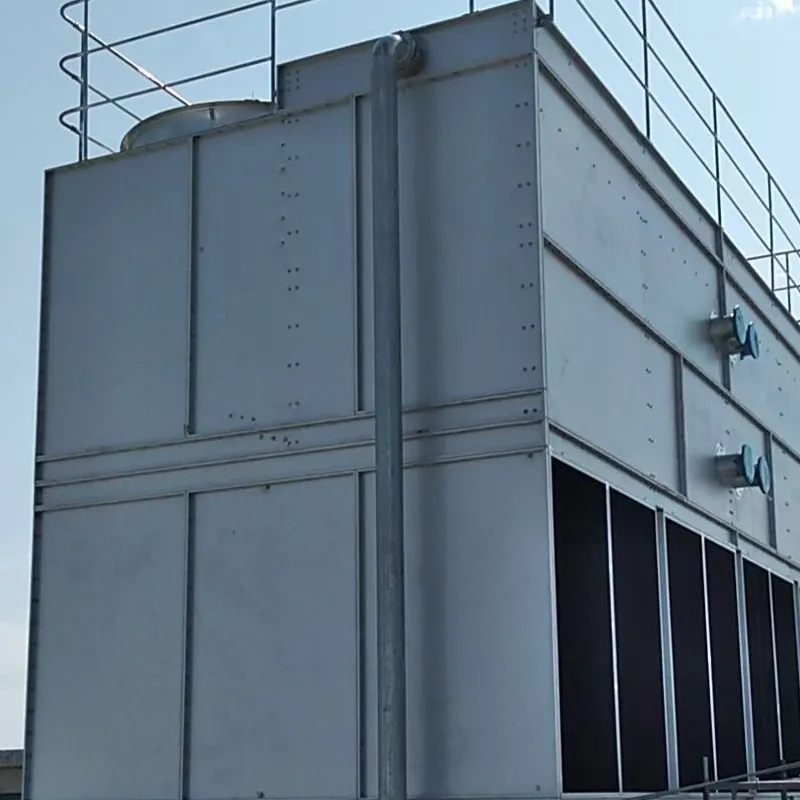
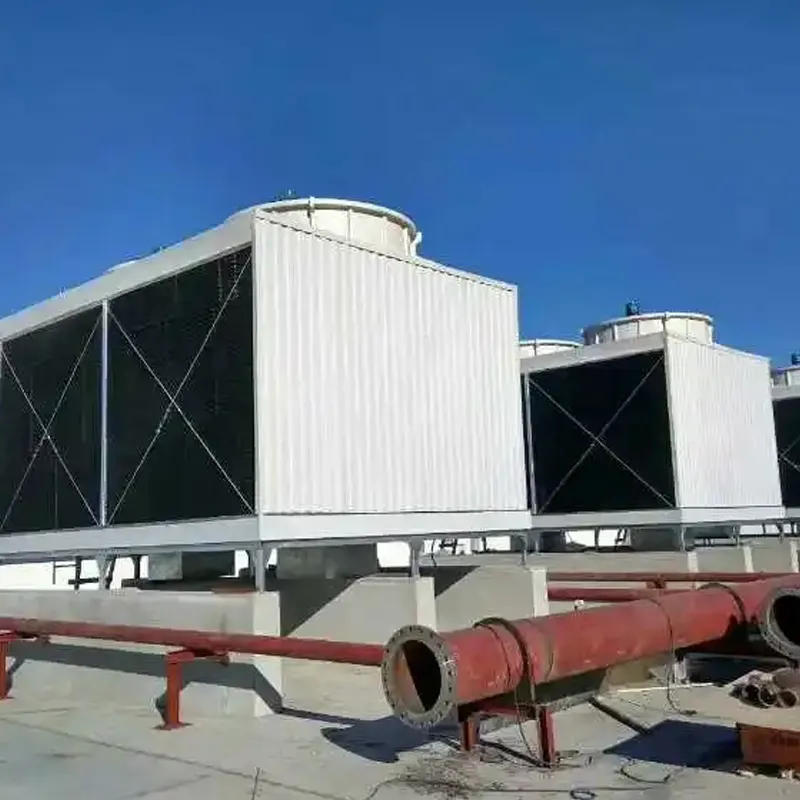
A cross flow cooling tower operates with air flowing horizontally across the falling water. Instead of pressurized nozzles, it uses gravity to distribute water evenly over the fill media.
Key Characteristics:
- Air flows horizontally, water flows downward
- Gravity-fed water distribution system
- Open and simple structure
Advantages:
Cross flow cooling towers are known for their energy efficiency because they do not rely on high-pressure pumps. Their simpler design also makes them easier to maintain and operate.
Another key benefit is the lower upfront cost, which makes them attractive for budget-conscious projects or applications with moderate cooling requirements.
Disadvantages:
On the downside, cross flow cooling towers generally require a larger footprint. Their open design also makes them more vulnerable to environmental factors such as wind, which can affect performance.
In terms of efficiency, they are slightly less effective than counter flow systems, especially in demanding industrial applications.
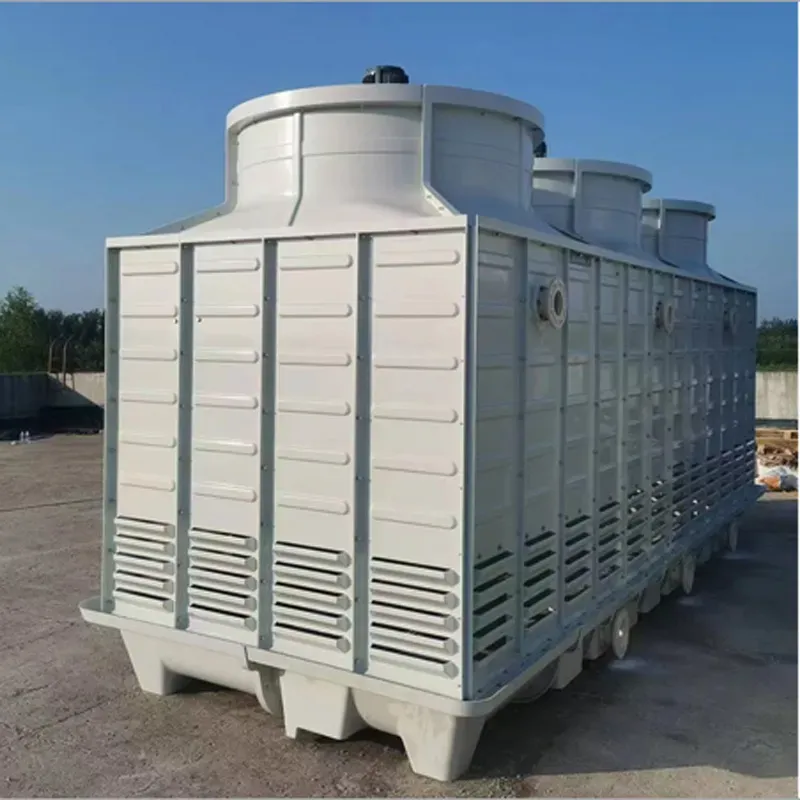
Counter Flow vs Cross Flow Cooling Tower: Key Differences
When comparing counter flow vs cross flow cooling tower, several important factors should be considered:
1. Cooling Efficiency
Counter flow cooling towers provide superior cooling efficiency due to the direct opposition of air and water flow. Cross flow towers offer good performance but are generally less efficient.
2. Energy Consumption
Cross flow systems consume less energy because they use gravity-based water distribution. Counter flow towers require pumps, which increases energy usage.
3. Space Requirements
Counter flow towers are more compact and suitable for tight spaces. Cross flow towers need more installation area due to their larger design.
4. Maintenance
Cross flow cooling towers are easier to maintain due to their open layout. Counter flow towers, with internal components like spray nozzles, may require more detailed maintenance.
5. Initial Investment
Cross flow towers typically have lower upfront costs, while counter flow towers involve higher initial investment but better long-term efficiency.
Applications of Counter Flow and Cross Flow Cooling Towers
The choice between these two types often depends on the specific application:
Counter Flow Cooling Towers:
- Power plants
- Chemical and petrochemical industries
- Heavy industrial cooling systems
- Projects requiring high efficiency and compact design
Cross Flow Cooling Towers:
- Commercial HVAC systems
- Light industrial applications
- Buildings with sufficient installation space
- Projects with limited budgets
How to Choose Between Counter Flow and Cross Flow Cooling Towers
Selecting the right cooling tower requires balancing performance, cost, and operational needs.
Choose a برج التبريد ذو التدفق المضاد if your priority is maximum cooling efficiency, limited space, and long-term performance optimization.
Choose a cross flow cooling tower if you are looking for lower initial costs, easier maintenance, and reduced energy consumption.
It is also important to consider factors such as climate conditions, water quality, and long-term maintenance capabilities when making your decision.
Conclusion: Counter Flow vs Cross Flow Cooling Tower
In the debate of counter flow vs cross flow cooling tower, there is no universally better option. Each design offers unique benefits depending on the application.
Counter flow cooling towers deliver higher efficiency and compact design, making them ideal for demanding industrial environments. Cross flow cooling towers provide cost-effective and energy-saving solutions, suitable for less intensive applications.
By carefully evaluating your project requirements, budget, and operational goals, you can select the cooling tower that delivers optimal performance and long-term value.