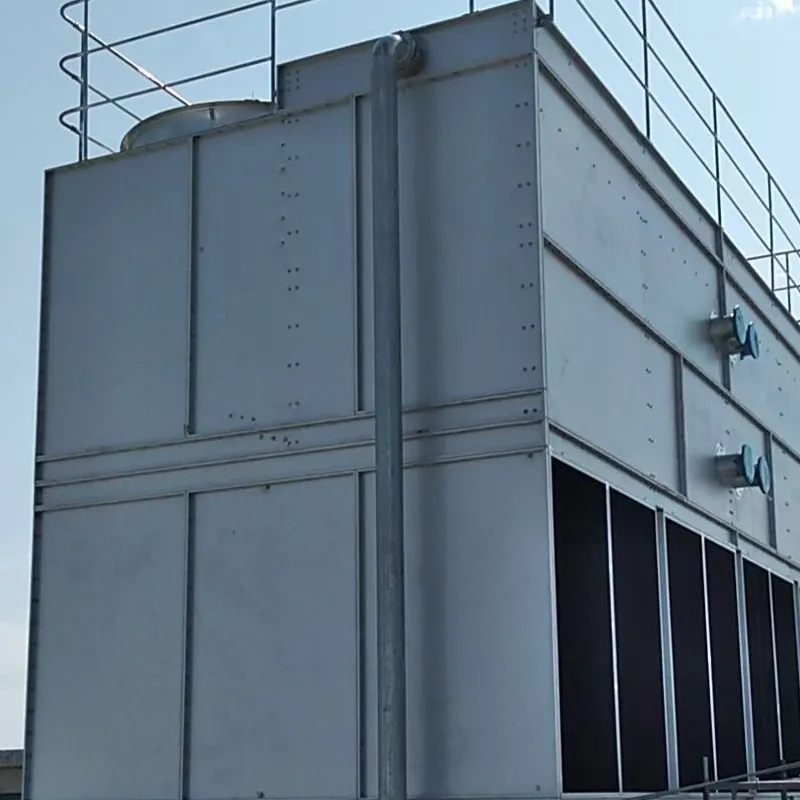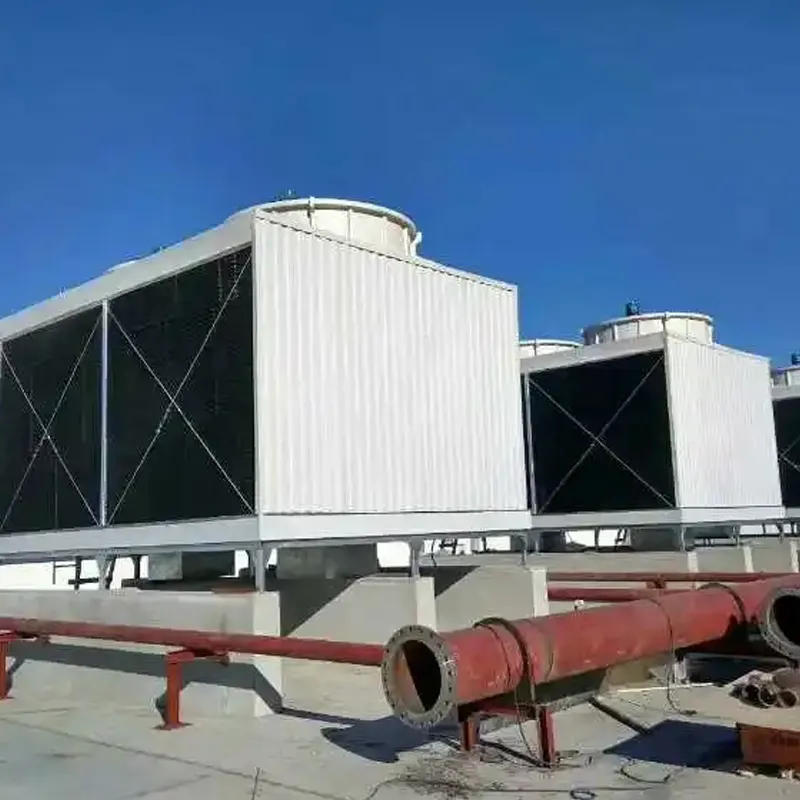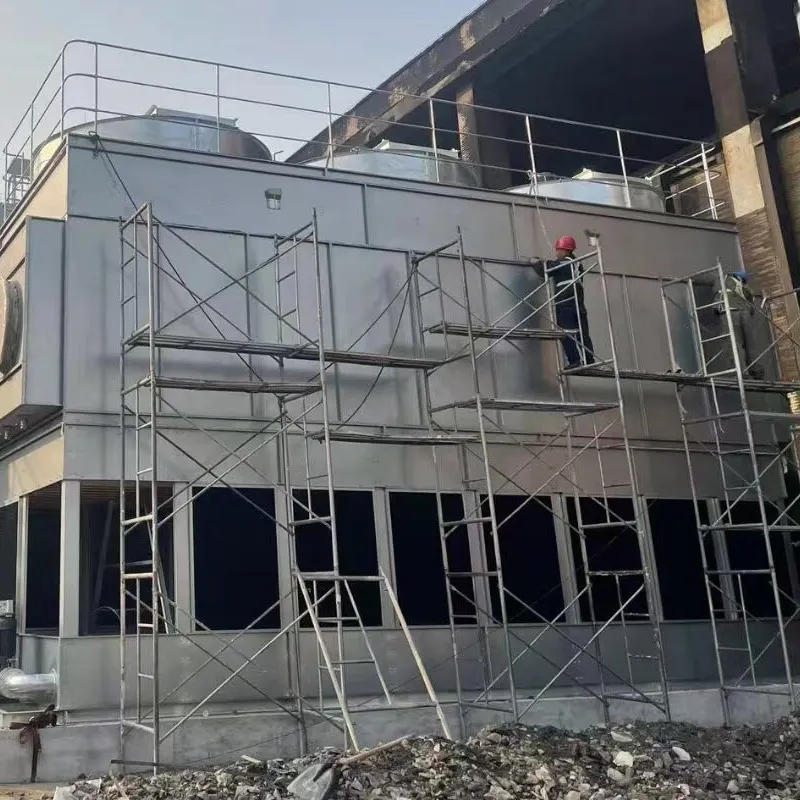
In modern industrial and HVAC systems, efficient heat rejection is essential for stable performance, energy savings, and equipment longevity. Among the available cooling technologies, closed-circuit cooling towers (also known as indirect cooling towers أو fluid coolers) have become increasingly popular due to their superior hygiene, reduced maintenance requirements, and long-term operational efficiency.
Compared with traditional open cooling towers, closed-circuit systems offer a more controlled cooling process that isolates process fluid from external contamination. This makes them an ideal solution for industries such as HVAC, power generation, chemical processing, food production, and data centers.
In this article, we will explore three key reasons why closed-circuit cooling towers are the preferred choice for many modern cooling applications.
1. Superior Water Quality Protection and Contamination Control
One of the most significant advantages of a closed-circuit cooling tower is its ability to protect the process fluid from external contamination.
In an open cooling tower, water is directly exposed to the atmosphere. This means dust, debris, algae, bacteria, and airborne pollutants can easily enter the system. Over time, this leads to scaling, corrosion, and biofouling, which significantly reduces system efficiency and increases maintenance costs.
In contrast, a closed-circuit cooling tower circulates process fluid through a sealed coil. The external cooling water never mixes with the internal process fluid. Instead, heat is transferred through the coil wall while an external spray water system enhances heat dissipation.
Key benefits of contamination control:
- Prevents scaling and fouling inside critical process equipment
- Reduces risk of bacterial growth such as Legionella
- Improves system hygiene for sensitive industries (food, pharma, HVAC)
- Extends equipment lifespan by minimizing corrosion
This sealed-loop design makes closed-circuit cooling towers especially valuable in environments where water purity and system cleanliness are critical performance factors.
2. Lower Maintenance Requirements and Reduced Operational Downtime
Another major reason industries choose closed-circuit cooling towers is the significant reduction in maintenance demands.
Open cooling towers require frequent cleaning, chemical treatment, and mechanical servicing due to constant exposure to environmental contaminants. Operators must regularly manage algae growth, scale buildup, and sludge accumulation in the basin.
Closed-circuit systems, however, minimize these issues by isolating the process fluid and maintaining a cleaner internal environment. As a result, maintenance tasks become simpler, less frequent, and less costly.
How closed-circuit cooling towers reduce maintenance:
- Reduced chemical treatment requirements due to cleaner water circuits
- Less frequent cleaning of heat exchange surfaces
- Lower risk of clogging in pipes and heat exchangers
- Fewer operational interruptions for system servicing
Additionally, many modern closed-circuit cooling tower designs incorporate advanced drift eliminators, corrosion-resistant materials, and optimized coil designs, further improving durability and reducing service frequency.
For facility managers, this translates into:
- Lower labor costs
- Improved system reliability
- Reduced downtime in critical operations
In industries where continuous operation is essential—such as data centers or manufacturing plants—this reliability is a major advantage.
3. Higher Energy Efficiency and Improved Thermal Performance
Energy efficiency is a top priority in modern industrial cooling systems, especially as companies aim to reduce operational costs and carbon emissions. Closed-circuit cooling towers offer enhanced thermal performance compared to traditional open systems, particularly in demanding environments.
The combination of evaporative cooling and heat exchanger technology allows closed-circuit systems to achieve efficient heat transfer even under high thermal loads.
Why they are more energy efficient:
- Dual cooling mechanism (air + evaporative spray water) improves heat rejection
- Stable operating temperatures reduce compressor and chiller workload
- Optimized airflow design reduces fan energy consumption
- Better performance in high ambient temperature conditions
Unlike open systems, which often suffer from efficiency loss due to scaling or water quality issues, closed-circuit cooling towers maintain more consistent performance over time. This stability ensures that energy consumption does not gradually increase due to system degradation.
Long-term efficiency benefits include:
- Reduced electricity consumption
- Lower carbon footprint
- Improved system COP (Coefficient of Performance)
- Better compatibility with modern energy-saving HVAC systems
For industries seeking to meet sustainability targets, closed-circuit cooling towers provide a strong balance between performance and environmental responsibility.
Additional Advantages Worth Considering
While the three main reasons above highlight the core benefits, closed-circuit cooling towers also offer several additional advantages that make them a smart long-term investment:
- Water conservation: Reduced evaporation losses compared to open systems
- Freeze protection options: Suitable for cold climate applications
- Flexible installation: Can be used in indoor or rooftop configurations
- Noise control options: Designed with low-noise fans for urban environments
These added features make them highly adaptable across a wide range of industries and project requirements.
خاتمة
اختيار الحق cooling tower systems is critical for ensuring operational efficiency, reducing costs, and maintaining long-term system stability. Closed-circuit cooling towers stand out as a modern and reliable solution due to their ability to:
- Protect water quality and eliminate contamination risks
- Reduce maintenance requirements and operational downtime
- Deliver higher energy efficiency and stable thermal performance
As industries continue to prioritize sustainability, efficiency, and system reliability, closed-circuit cooling technology is becoming an increasingly preferred choice over traditional open cooling systems.
Whether used in HVAC systems, industrial processes, or high-demand environments like data centers, these systems offer a future-ready cooling solution that balances performance, hygiene, and cost-effectiveness.