In the demanding landscape of industrial thermal management, the draft cooling tower stands as a critical piece of infrastructure designed to dissipate waste heat into the atmosphere. These systems are indispensable for maintaining operational stability in power plants, chemical refineries, and large-scale manufacturing hubs, ensuring that machinery operates within safe temperature parameters to prevent catastrophic failure.
The global shift toward energy efficiency and sustainable industrialization has put a spotlight on the design and material composition of these towers. As industries strive to reduce their carbon footprint and water consumption, the evolution of the draft cooling tower—particularly those utilizing advanced Fiber Reinforced Plastic (FRP)—has become a focal point for engineers seeking a balance between thermal performance and structural longevity.
Understanding the nuances of draft cooling tower technology is not merely a technical requirement but a strategic advantage. By optimizing heat exchange processes and utilizing corrosion-resistant materials, enterprises can significantly lower their operational expenditures (OPEX) while enhancing the reliability of their primary production lines across various global sectors.
Global Relevance of Draft Cooling Tower Systems
On a global scale, the draft cooling tower is the unsung hero of the energy sector. With the International Energy Agency (IEA) emphasizing the need for modernized power infrastructure to meet rising global electricity demands, the efficiency of heat rejection systems has become paramount. In regions like Southeast Asia and the Middle East, where ambient temperatures are extreme, the ability of a draft cooling tower to maintain a consistent temperature gradient is the difference between peak productivity and costly downtime.
The challenge lies in the harsh environments these systems inhabit. Exposure to moisture, varying pH levels in cooling water, and atmospheric pollutants often lead to rapid degradation of traditional materials. This is why the industry has pivoted toward high-performance composites, ensuring that the draft cooling tower can withstand decades of service without requiring frequent, expensive structural overhauls.
Technical Definitions and Core Mechanism
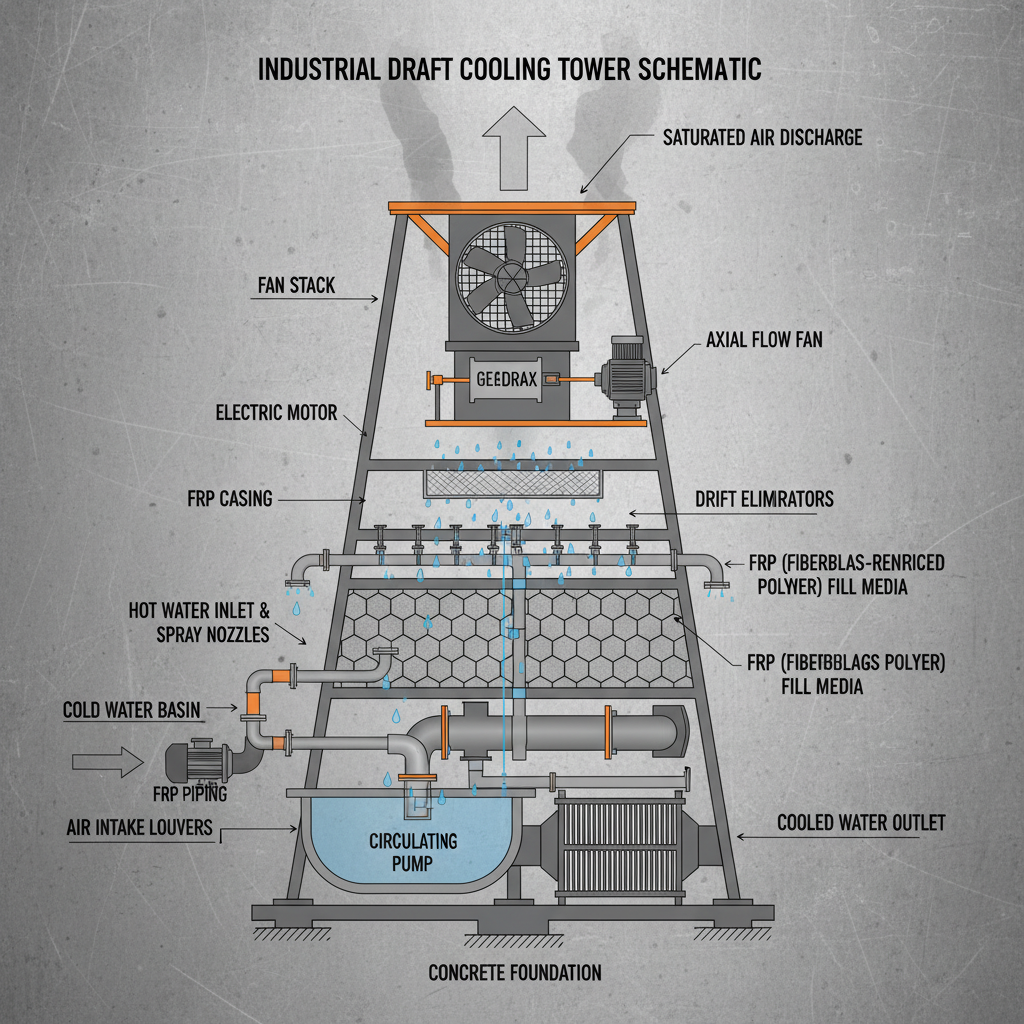
A draft cooling tower is a specialized heat exchanger in which water is cooled by evaporating a small portion of the water. This process leverages the principle of evaporative cooling, where the heat from the water is transferred to the air. Depending on the design, the air movement (the "draft") is achieved either naturally through the chimney effect—where warm air rises—or mechanically via high-capacity fans.
In the context of modern industry, this mechanism is vital for closed-loop water systems. By utilizing a draft cooling tower, plants can reuse their process water repeatedly, drastically reducing the volume of freshwater intake. This aligns with ISO 14001 environmental management standards, helping companies mitigate their impact on local water tables and ecosystem biodiversity.
Whether it is a hyperbolic natural draft tower or a cross-flow mechanical draft system, the core objective remains the same: maximizing the contact area between the hot water and the cooling air. This is typically achieved through "fill" materials that break the water into thin films or small droplets, optimizing the latent heat of vaporization.
Critical Components for Optimal Performance
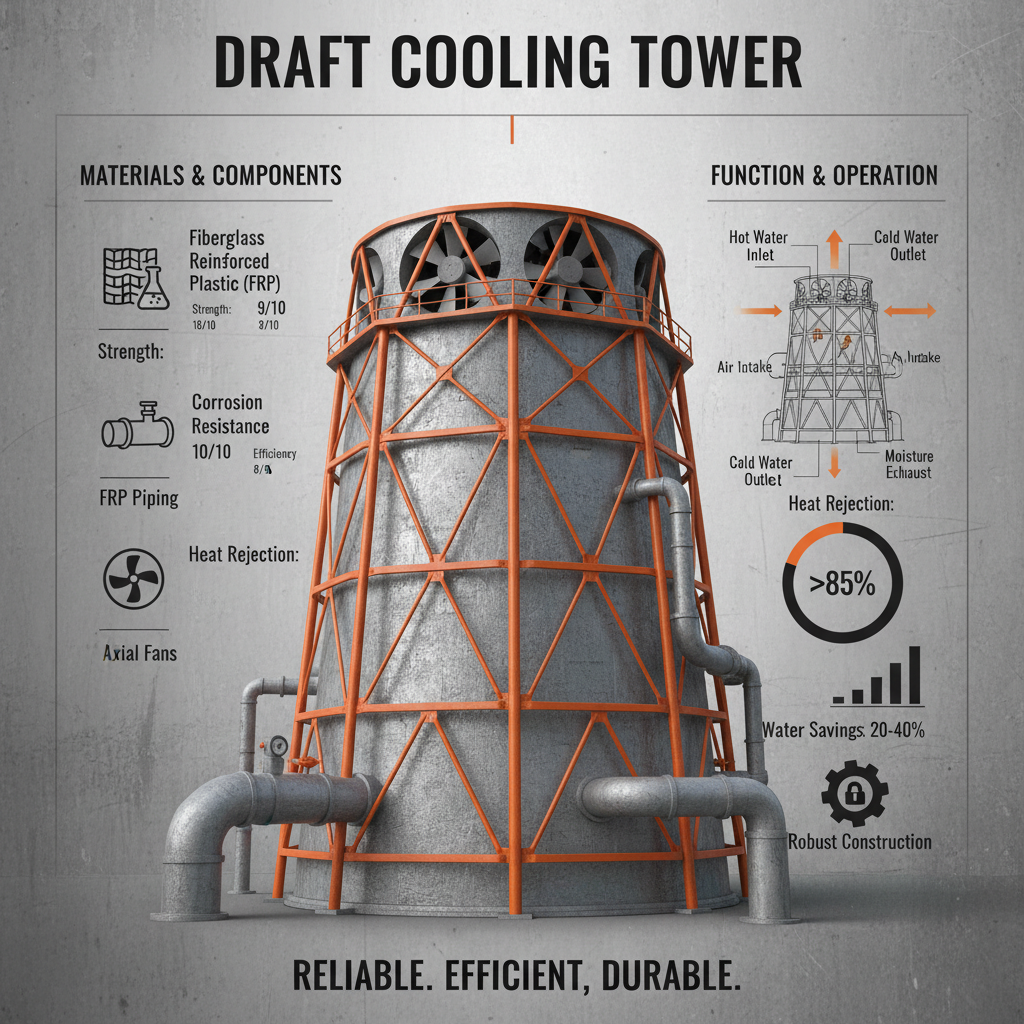
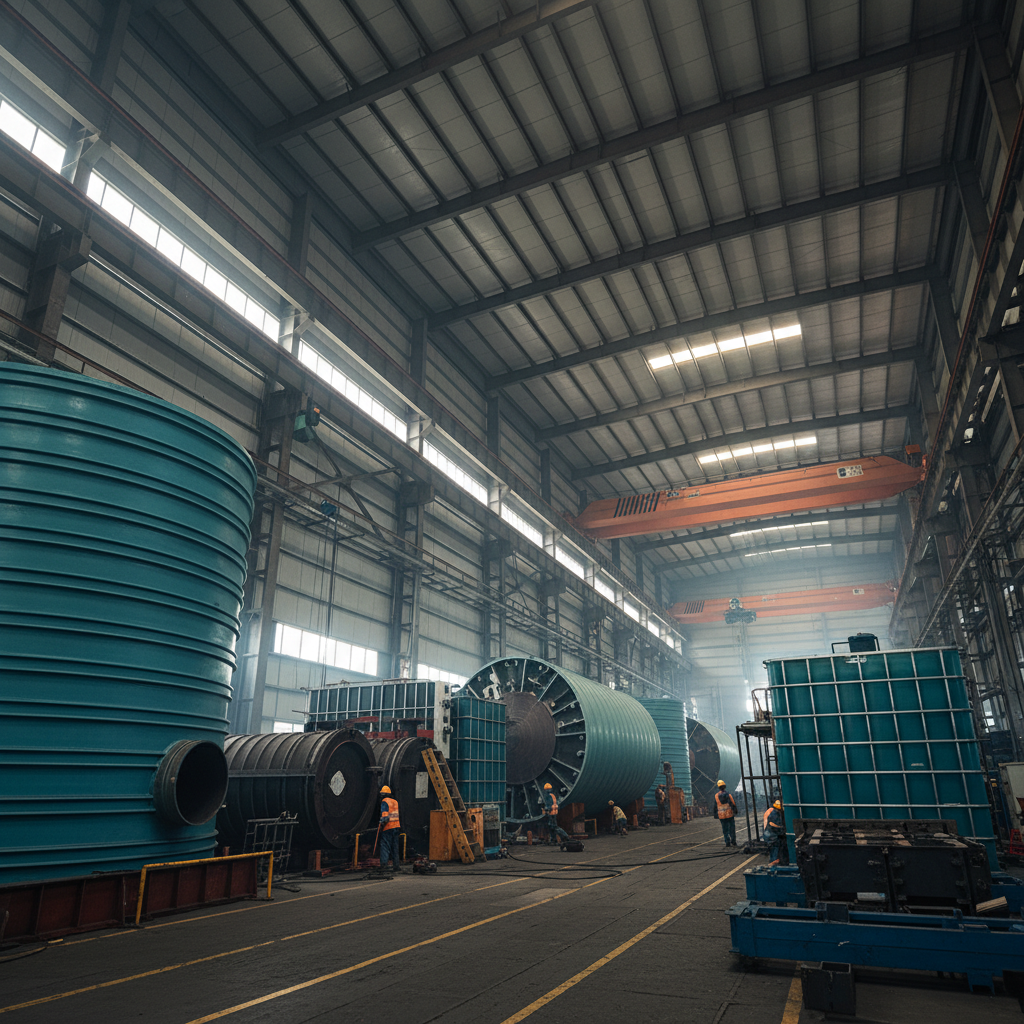
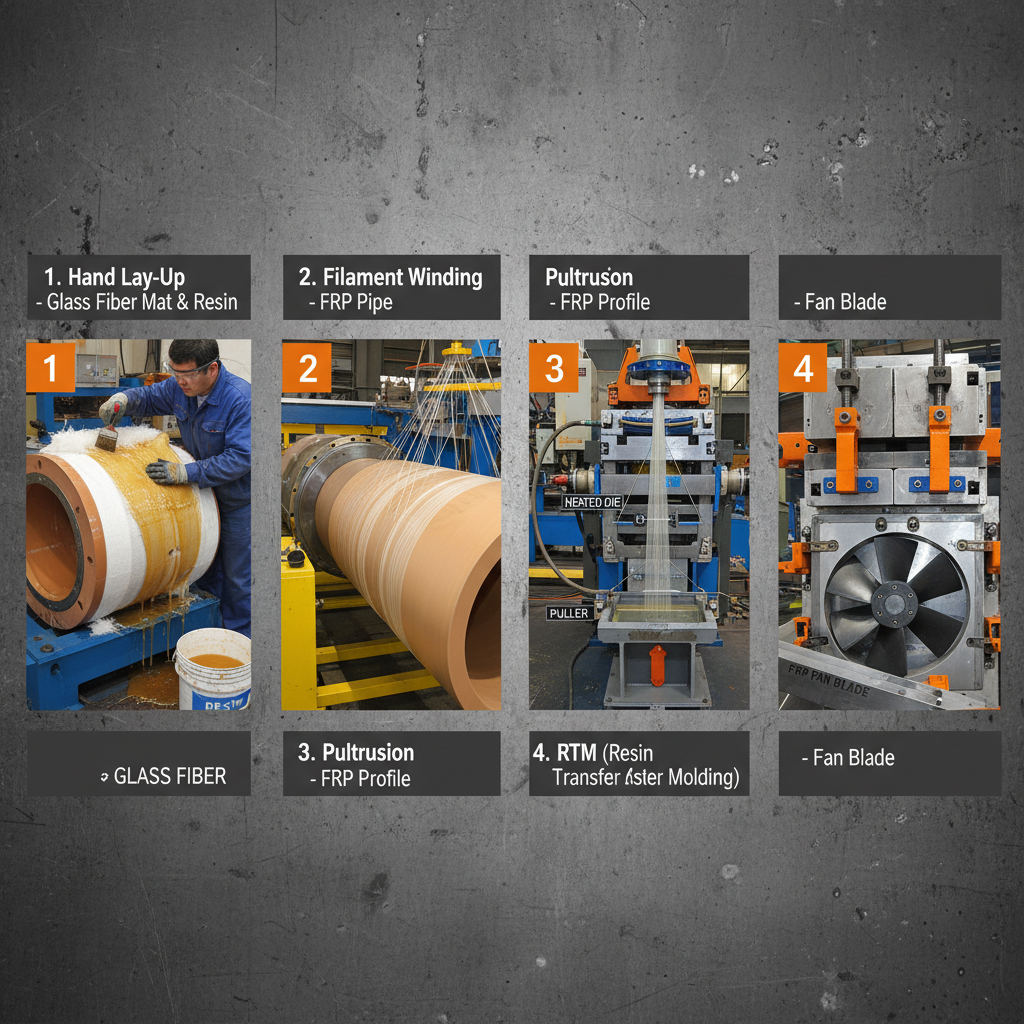
The structural integrity of a draft cooling tower begins with its shell and support structure. Modern engineering favors FRP (Fiber Reinforced Plastic) due to its exceptional strength-to-weight ratio and total immunity to electrochemical corrosion, which is a primary failure point in steel-based towers.
Central to the efficiency of the draft cooling tower is the "Fill" or heat transfer medium. High-efficiency fills are engineered to maximize surface area while minimizing air pressure drop, ensuring that the draft—whether natural or forced—can move the maximum volume of air with the least resistance.
Finally, the distribution system and drift eliminators play a crucial role. An uneven water distribution in a draft cooling tower leads to "dry spots" and reduced thermal efficiency, while high-quality drift eliminators prevent water droplets from escaping the tower, thereby reducing water loss and preventing the spread of mineral deposits around the site.
Comparative Efficiency of Draft Methods
When selecting the right configuration for a draft cooling tower, engineers typically weigh the benefits of Natural Draft versus Induced Draft systems. Natural draft towers, characterized by their iconic hyperbolic shape, are ideal for massive power plants where the sheer volume of heat rejection justifies the initial construction cost and the reliance on atmospheric temperature differentials.
In contrast, mechanical induced draft towers provide precise control over the airflow, making them suitable for smaller industrial footprints or climates where natural buoyancy is insufficient. The efficiency of these systems depends heavily on the motor power and fan blade pitch, allowing operators to scale cooling capacity based on real-time load requirements.
Performance Comparison of Draft Cooling Tower Configurations
Industrial Applications Across Global Regions
The application of the draft cooling tower spans across diverse sectors. In the energy sector, specifically in coal and nuclear power plants, these towers are essential for condensing steam back into water. In the petrochemical industry, they manage the exothermic heat generated during complex chemical synthesis, ensuring that reactors do not overheat and compromise safety.
Geographically, we see distinct trends: in the arid regions of Australia and the Southwestern US, there is a heavy emphasis on "dry" or "hybrid" draft cooling towers to conserve scarce water resources. Meanwhile, in the industrial zones of China and India, the focus is on high-capacity FRP towers that can be deployed quickly to support rapidly expanding manufacturing capacities.
Long-term Value and Sustainability Impact
The long-term value of investing in a high-quality draft cooling tower extends beyond simple temperature control. By utilizing FRP materials, operators eliminate the need for frequent painting and rust-proofing, which are common in steel towers. This reduces the lifecycle cost of the asset and minimizes the release of volatile organic compounds (VOCs) associated with industrial coatings.
Furthermore, the social and emotional angle of sustainability cannot be overlooked. Companies that implement high-efficiency cooling solutions demonstrate a commitment to environmental stewardship. This builds trust with local communities and regulatory bodies, proving that industrial growth does not have to come at the expense of local water quality or atmospheric health.
From a logical perspective, the reliability of a well-engineered draft cooling tower reduces the risk of unplanned outages. In high-stakes environments like data centers or pharmaceutical plants, where a few degrees of temperature fluctuation can lead to millions of dollars in losses, the "insurance" provided by a robust cooling system is invaluable.
Future Innovations in Cooling Technology
The future of the draft cooling tower is being shaped by digital transformation and "Industry 4.0." We are seeing the integration of IoT sensors into the FRP structure, allowing for real-time monitoring of fill fouling and airflow efficiency. Predictive maintenance algorithms can now alert operators to scale build-up before it affects the heat exchange rate, shifting the paradigm from reactive to proactive care.
Material science is also evolving, with the introduction of nano-enhanced resins that provide even higher thermal conductivity and resistance to extreme UV radiation. These innovations ensure that the draft cooling tower remains efficient even in the most punishing climates, while further reducing the total mass of material required for construction.
Additionally, there is a growing trend toward "Green Cooling," where draft cooling towers are integrated with renewable energy sources to power their fans. The goal is to create a carbon-neutral thermal management cycle, where the energy used to cool the plant is offset by on-site solar or wind generation, making the industrial process truly sustainable.
Comparative Analysis of Draft Cooling Tower Material and Design Evolution
| Design Era |
Primary Material |
Maintenance Frequency |
Eco-Efficiency Score |
| Early Industrial |
Cast Iron/Steel |
High (Annual) |
3/10 |
| Mid-Century |
Reinforced Concrete |
Medium (5-year) |
5/10 |
| Modern Era |
Standard FRP |
Low (10-year) |
8/10 |
| Advanced FRP |
UV-Stabilized Composite |
Very Low (15-year) |
9/10 |
| Smart Cooling |
Sensor-Integrated FRP |
Predictive |
10/10 |
| Hybrid Green |
Bio-Composite/FRP |
Low |
9/10 |
FAQS
Natural draft cooling towers rely on the density difference between the warm air inside the tower and the cooler ambient air to create a chimney effect, requiring no fans. Mechanical draft towers use large fans to force or pull air through the system. Natural draft is typically used for very large-scale power plants, while mechanical draft is more flexible and compact for general industrial use.
FRP (Fiber Reinforced Plastic) offers superior corrosion resistance, which is critical since cooling towers constantly deal with moisture and chemical treatments. Unlike steel, it doesn't rust; unlike concrete, it doesn't crack or spall over time due to thermal cycling. FRP is also lighter, reducing foundation costs and accelerating installation times.
Fill replacement intervals vary depending on water quality and maintenance. In well-managed systems with proper water treatment, FRP fills can last 10-15 years. However, if the water has high mineral content causing scaling or biological fouling, replacement or deep cleaning may be needed every 5-7 years to maintain thermal efficiency.
Yes, but they require specific modifications to prevent freezing. This includes the use of basin heaters, recirculation of warm water to prevent ice buildup on the fill, and sometimes the use of variable-frequency drives (VFDs) on fans to reduce airflow during winter, ensuring the tower doesn't "over-cool" the process water.
Cooling towers consume water through evaporation, "drift" (droplets carried away by air), and "blowdown" (water drained to remove mineral buildup). Modern draft cooling towers utilize high-efficiency drift eliminators and advanced water treatment to minimize these losses, significantly lowering the overall water footprint of the facility.
Absolutely. Many industrial plants undergo "brownfield" upgrades where old steel internals are replaced with high-efficiency FRP fills, nozzles, and drift eliminators. This often results in a significant increase in cooling capacity and a reduction in maintenance costs without needing to rebuild the entire external structure.
Conclusion
The draft cooling tower remains a cornerstone of industrial efficiency, bridging the gap between high-intensity production and environmental sustainability. From the selection of corrosion-resistant FRP materials to the implementation of smart monitoring systems, every technical detail contributes to the overall reliability and cost-effectiveness of the heat rejection process. By optimizing these systems, industries can ensure operational stability while adhering to global environmental standards.
Looking forward, the integration of AI-driven maintenance and bio-composite materials will likely redefine the lifecycle of cooling infrastructure. For enterprises seeking to future-proof their operations, investing in high-specification draft cooling technology is no longer optional—it is a strategic necessity for sustainable growth. To explore the best-in-class solutions for your facility, visit our website: www.hlfrp.com.