In the demanding landscape of industrial thermal management, forced draft cooling towers stand as a cornerstone of operational efficiency. These specialized systems are engineered to reject waste heat from water-cooled processes by mechanically forcing air through a stream of water, ensuring that critical machinery and power plants maintain optimal operating temperatures regardless of external atmospheric conditions.
The global shift toward high-efficiency manufacturing and sustainable energy production has placed a premium on the reliability of heat rejection systems. By utilizing advanced materials like Fiber Reinforced Plastic (FRP), modern forced draft cooling towers offer a sophisticated balance of corrosion resistance and structural integrity, addressing the challenges of water scarcity and energy waste in heavy industry.
Understanding the nuances of forced draft technology is essential for engineers and facility managers aiming to reduce downtime and operational costs. From power generation to chemical processing, the ability to precisely control airflow and heat exchange allows these systems to deliver consistent performance in diverse climates, making them an indispensable asset in the modern industrial toolkit.
Global Significance and Industry Context of Forced Draft Cooling Towers
On a global scale, the demand for consistent thermal regulation is rising as industrialization expands in emerging economies. According to international industrial standards, efficient heat rejection is critical to preventing equipment failure and reducing the carbon footprint of power plants. forced draft cooling towers play a pivotal role here, as they allow facilities to operate at maximum capacity even in regions with low natural wind speeds or extreme humidity.
The primary challenge addressed by these systems is the instability of natural convection. In many industrial zones, relying on natural drafts is insufficient for the heat loads generated by modern high-pressure turbines or large-scale chemical reactors. By implementing a mechanical fan system, industries can guarantee a steady volume of air, thereby stabilizing the cooling process and protecting multi-million dollar assets from thermal stress.
Defining the Mechanics of Forced Draft Cooling Towers
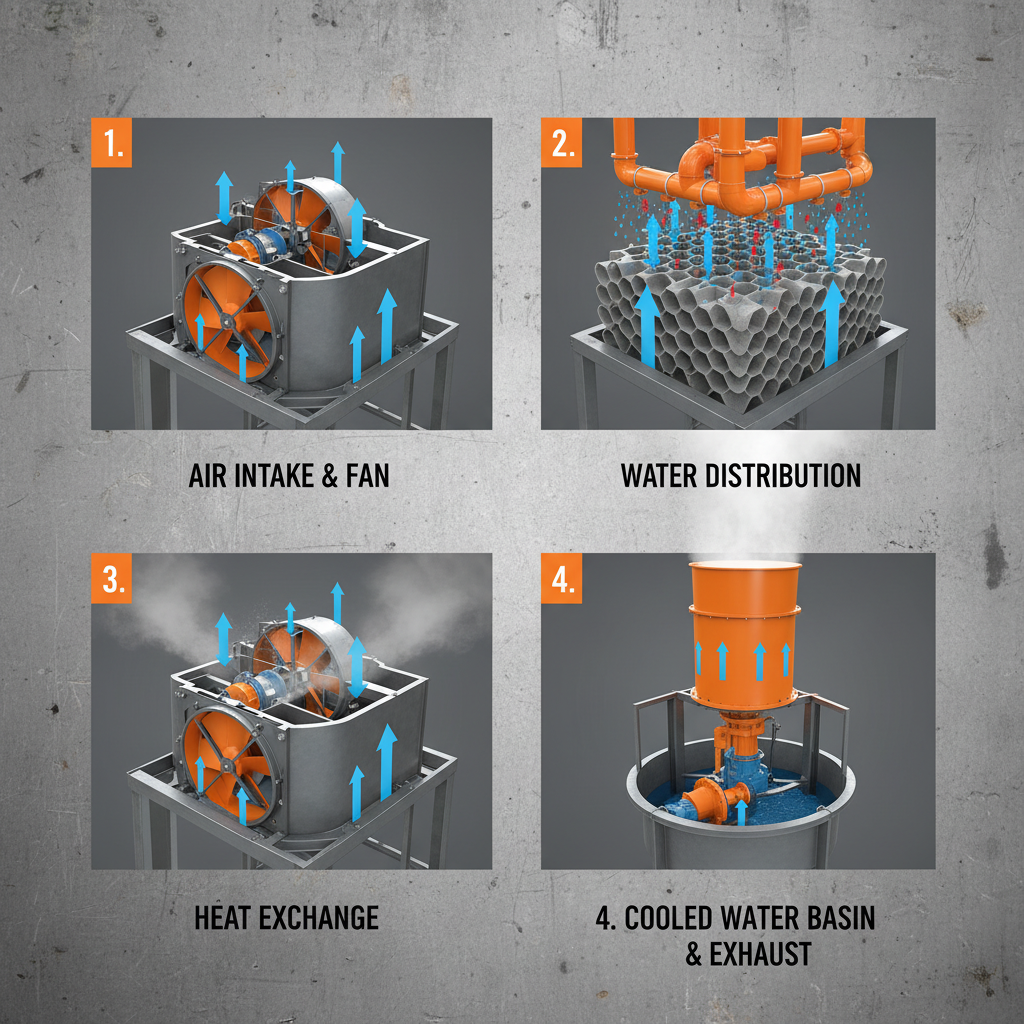
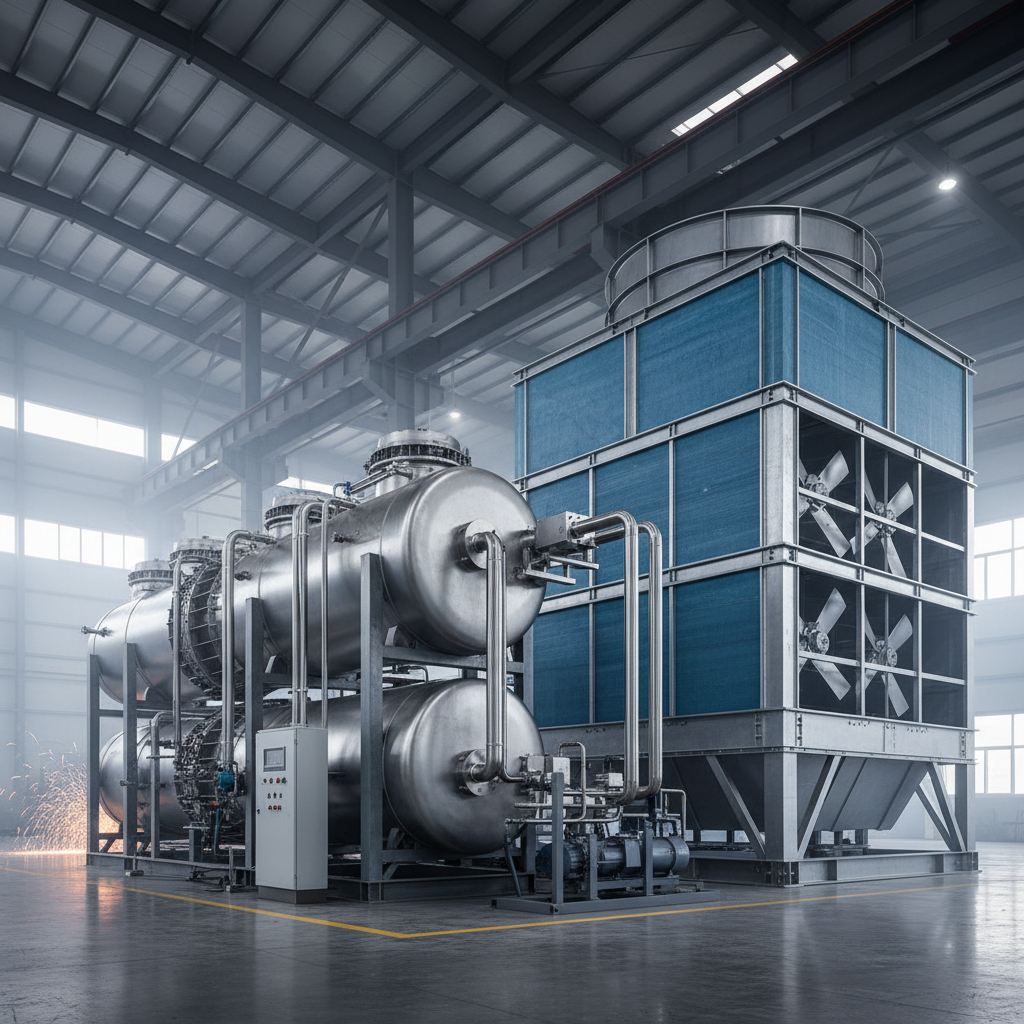
At its most basic level, a forced draft cooling tower is a heat exchanger that uses a mechanical fan located at the air intake to push air upward through a fill medium where it meets descending hot water. This process facilitates the evaporation of a small portion of the water, which absorbs latent heat from the remaining liquid, effectively lowering the water temperature before it is recirculated back into the industrial process.
Unlike induced draft systems where the fan is at the top, the forced draft configuration allows for a more compact design and often lower initial installation costs. This makes it a preferred choice for smaller to medium-scale applications or in environments where the tower must be integrated into a complex arrangement of existing piping and equipment.
In the context of modern humanitarian and industrial needs, these towers are essential for maintaining hygiene in large-scale HVAC systems for hospitals and providing necessary cooling for desalination plants in arid regions. The ability to "force" the cooling process ensures that critical infrastructure remains operational regardless of the volatility of the local environment.
Core Components and Material Excellence
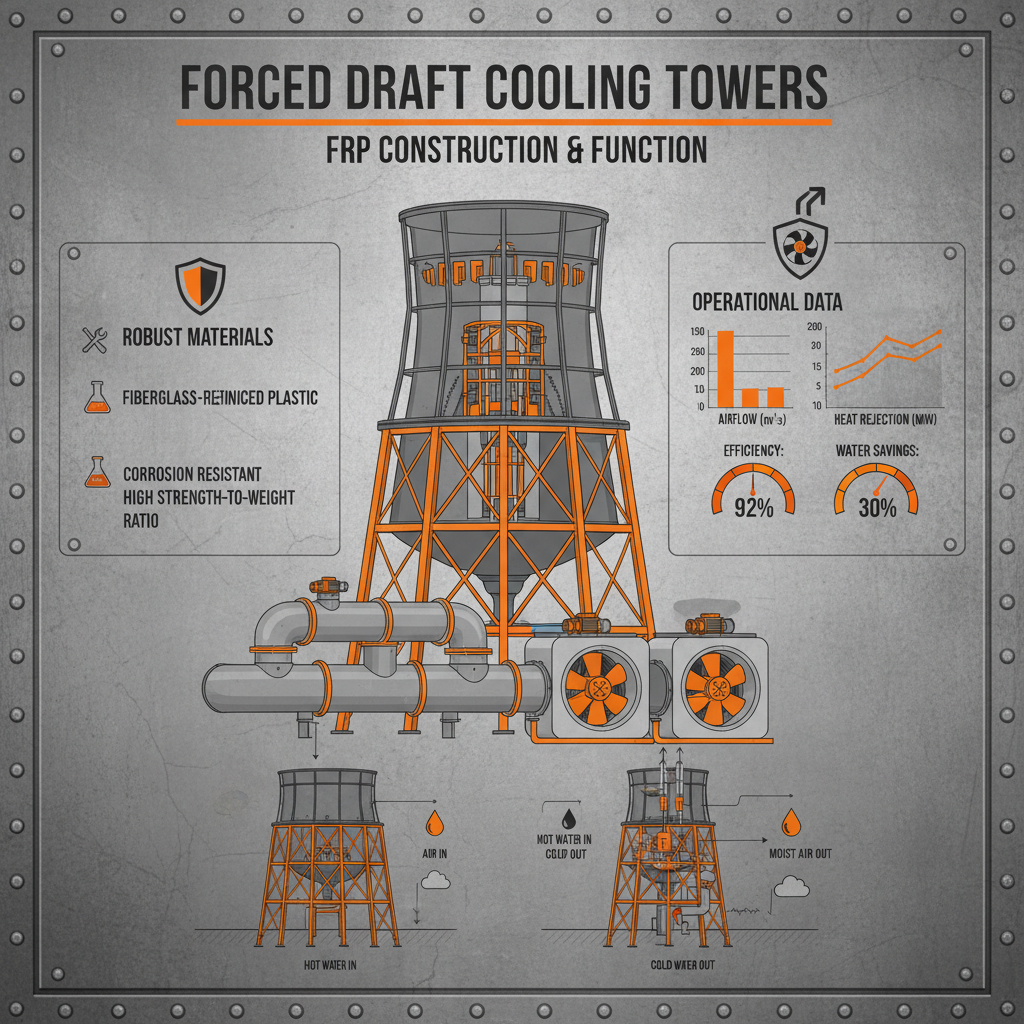
The durability of forced draft cooling towers is largely dependent on the quality of their structural materials. High-grade Fiber Reinforced Plastic (FRP) is now the industry standard because it combines the strength of glass fibers with the corrosion resistance of specialized resins, ensuring the tower can withstand constant exposure to moisture and chemical additives.
Crucial components include the axial fan, the fill media (which maximizes the surface area for heat exchange), and the drift eliminators. When these parts are constructed from FRP, they resist algae growth and oxidation, significantly extending the maintenance cycle and reducing the total cost of ownership for the plant operator.
Scalability is another key factor. Because forced draft systems can be modularized, engineers can easily expand their cooling capacity by adding additional cells. This flexibility allows a facility to grow its production capacity without having to completely redesign its thermal management infrastructure.
Performance Metrics and Efficiency Analysis
Evaluating the efficiency of forced draft cooling towers requires a look at the "approach" (the difference between the cold water temperature and the ambient wet-bulb temperature). A lower approach indicates a more efficient tower. By optimizing the fan speed and the fill density, operators can achieve superior thermal performance while minimizing energy consumption.
Modern data-driven management allows for the integration of Variable Frequency Drives (VFDs) on the fans, which adjust the airflow based on real-time temperature sensors. This prevents the system from over-cooling during winter months, leading to significant electricity savings.
Performance Comparison of Cooling Tower Configurations
Diverse Global Applications and Use Cases
The versatility of forced draft cooling towers makes them suitable for a vast array of industries. In the petrochemical sector, they are used to cool process fluids in highly corrosive environments where FRP construction is a necessity. Similarly, in the power generation sector, they serve as the primary heat sink for condenser water, ensuring that steam turbines operate at peak thermodynamic efficiency.
Beyond heavy industry, these systems are increasingly found in remote industrial zones, such as mining operations in the Andes or oil extraction sites in the Middle East. In these locations, the ability to maintain a controlled cooling environment despite extreme ambient temperature swings is critical for the survival of the machinery and the safety of the personnel.
Long-term Value and Sustainability Benefits
Investing in high-quality forced draft cooling towers provides tangible long-term financial value. By reducing the rate of corrosion and scaling through the use of FRP, companies can avoid the frequent and costly replacements associated with galvanized steel towers. This stability translates to lower operational risk and higher trust from stakeholders regarding the plant's uptime.
From a sustainability perspective, these towers contribute to water conservation when paired with efficient water treatment systems. By maximizing the heat exchange per cubic meter of air, they reduce the overall energy required to move air and water, directly lowering the facility's carbon footprint.
Moreover, the social impact is significant; by preventing industrial overheating and potential leaks through superior material integrity, these systems enhance the safety and dignity of the workforce. Reliability in cooling is not just a technical requirement—it is a safety mandate.
Future Innovations in Cooling Tower Technology
The future of forced draft cooling towers is being shaped by digital transformation. We are seeing the integration of AI-driven predictive maintenance, where sensors monitor vibration in the fan motors and pressure drops in the fill media to alert operators before a failure occurs. This shift from reactive to proactive maintenance is drastically reducing unplanned outages.
Material science is also evolving. New nano-composite resins are being integrated into FRP production to create surfaces that are even more hydrophobic and resistant to biofilm accumulation. This not only improves heat transfer efficiency but also reduces the amount of chemical biocides needed to keep the water clean.
Furthermore, the trend toward "green cooling" is pushing the industry toward hybrid systems that combine forced draft capabilities with adiabatic pre-cooling. This allows towers to operate more efficiently during extreme heatwaves, ensuring that global industries can remain productive as the planet warms.
Comparative Analysis of Cooling Tower Material and Design Specifications
| Design Variant |
Material Composition |
Corrosion Resistance |
Expected Lifespan (Years) |
| Standard Forced Draft |
Galvanized Steel |
Moderate |
10-15 |
| Industrial FRP Forced |
Glass Fiber Reinforced Plastic |
Excellent |
25-30 |
| Chemical Grade Forced |
Vinylester Resin FRP |
Superior |
30+ |
| Modular Small-Scale |
Polypropylene/FRP |
High |
15-20 |
| High-Capacity Forced |
Reinforced Composite |
Very High |
20-25 |
| Eco-Hybrid Forced |
Nano-FRP/Alloy |
Excellent |
25+ |
FAQS
Forced draft cooling towers provide a consistent and controllable airflow, which is critical in areas with low wind or stagnant air. While natural draft towers rely on the chimney effect, forced draft systems use mechanical fans to ensure that the heat rejection rate remains stable regardless of weather conditions, offering more predictable performance for sensitive industrial processes.
FRP (Fiber Reinforced Plastic) is specifically designed to resist corrosion. In highly aggressive environments, such as chemical plants or coastal areas with salt spray, an FRP forced draft cooling tower can easily last 25 to 30 years, significantly outperforming galvanized steel, which often requires frequent coating or replacement due to rust.
Yes, especially when equipped with Variable Frequency Drives (VFDs). While the fan requires electricity, the ability to precisely match the airflow to the current heat load prevents energy waste. When compared to the cost of equipment failure due to overheating, the energy investment in a forced draft system is highly cost-effective.
Absolutely. Because they are often modular, they can be customized in terms of cell count, fill material, and resin type (e.g., using Vinylester for extreme chemicals). This allows engineers to tailor the cooling capacity and material durability to the exact requirements of their specific application.
Maintenance primarily involves inspecting the fan belts, lubricating motor bearings, and cleaning the fill media to remove scale or biological growth. Using FRP materials reduces the need for structural painting or rust treatment, making the overall maintenance schedule much leaner than traditional metal towers.
Choose a forced draft tower if you have limited space, a tighter initial budget, or need a system that is easier to install in complex piping layouts. Induced draft towers are generally better for very large capacities where the fan's position at the top creates a more uniform air distribution across the fill.
Conclusion
In summary, forced draft cooling towers represent a vital intersection of mechanical engineering and material science. By combining the active airflow of mechanical fans with the enduring strength of FRP materials, these systems provide the reliability, scalability, and corrosion resistance necessary for modern industrial survival. From maximizing the lifespan of power plant turbines to ensuring the efficiency of chemical reactors, the forced draft approach offers a stable and sustainable solution for global heat rejection needs.
Looking forward, the integration of smart sensors and nano-composite materials will only further enhance the value proposition of these systems. For companies seeking to optimize their thermal management and reduce long-term operational overhead, transitioning to high-performance FRP forced draft solutions is a strategic imperative. We invite you to explore how our specialized engineering can elevate your facility's efficiency. Visit our website: www.hlfrp.com