We Are Open 24 Hours a Day, 7 Days a Week, Including Weekends and Public Holidays.

Selecting the right industrial airflow solution often begins with identifying reliable centrifugal fan suppliers who understand the specific demands of corrosive or high-temperature environments. In the specialized field of environmental protection equipment, the shift toward advanced materials has transformed how facilities manage waste heat and air filtration, moving away from traditional metals toward high-performance composites.
The integration of Fiberglass Reinforced Plastic (FRP) into draught fans and cooling tower components has significantly mitigated the risks of chemical erosion and structural fatigue. For industries like power generation and petrochemicals, the synergy between a high-efficiency fan design and the corrosion-resistant properties of FRP ensures that heat exchange systems maintain peak operational stability over decades of continuous use.
This guide analyzes the technical benchmarks for evaluating centrifugal fan suppliers, focusing on material integrity, airflow dynamics, and the long-term ROI of composite equipment. By examining the intersection of mechanical engineering and material science, we provide a framework for procurement managers to optimize their environmental protection infrastructure.


Centrifugal fans are fundamental to industrial heat dissipation and air movement, utilizing centrifugal force to move air or gases through a system. Unlike axial fans, these units are capable of generating higher pressures, making them indispensable for draught fans in circular cooling towers and heavy-duty environmental protection equipment. The mechanical core involves an impeller that accelerates the air, which is then converted into static pressure at the outlet.
In the context of FRP manufacturing, these systems are often customized to handle moist, acidic, or alkaline air streams. By utilizing specialized geometries, manufacturers can optimize the balance between energy consumption and volumetric flow rate, ensuring that waste heat is efficiently removed from industrial processes without overloading the power grid.
The choice of material directly determines the operational lifespan of an industrial fan. While stainless steel was once the standard, the advent of high-grade Fiberglass Reinforced Plastic (FRP) has redefined durability. FRP provides an exceptional strength-to-weight ratio, which reduces the rotational inertia of the impeller, thereby lowering the starting torque required from the motor and reducing overall energy wear.
FRP construction effectively eliminates the risk of oxidation and chemical corrosion, which typically plague metal fans in petrochemical and power plant environments, extending the mean time between failures (MTBF) by significantly reducing structural degradation.
Beyond corrosion resistance, the thermal stability of the resin used in FRP products allows these fans to operate in diverse temperature ranges without warping. When sourcing from suppliers, it is crucial to verify the resin type—such as vinyl ester or polyester—to ensure it matches the specific chemical exposure of the installation site.
Implementing FRP-integrated centrifugal fans provides immediate value through the reduction of unplanned downtime. In traditional metal systems, microscopic pitting from corrosive air leads to imbalance and vibration, which eventually damages the bearings and motor. FRP’s inherent resistance to these elements maintains the impeller's aerodynamic profile over time.
The primary value of composite fan systems lies in the reduction of lifecycle costs; although the initial investment may be higher, the near-total elimination of anti-corrosion coatings and the reduction in replacement frequency create a superior ROI.
Furthermore, the lightweight nature of FRP allows for easier installation and retrofitting in existing circular cooling towers. This reduction in dead weight means that structural supports can be optimized, and maintenance teams can replace components with less heavy-lifting equipment, enhancing site safety and reducing labor hours.
Evaluating the efficiency of a fan system requires looking beyond the nominal airflow. Key metrics include the static pressure capability, the specific power consumption (kW per m³/s), and the noise emission levels. FRP fans often exhibit lower acoustic signatures due to the damping properties of the composite material, which is a critical factor for facilities located near residential zones.
When comparing composite fans to traditional galvanized steel options, the differences in durability and energy efficiency become apparent over a five-year window. The following data illustrates the relative performance and maintenance requirements typical for these two material classes in corrosive environments.
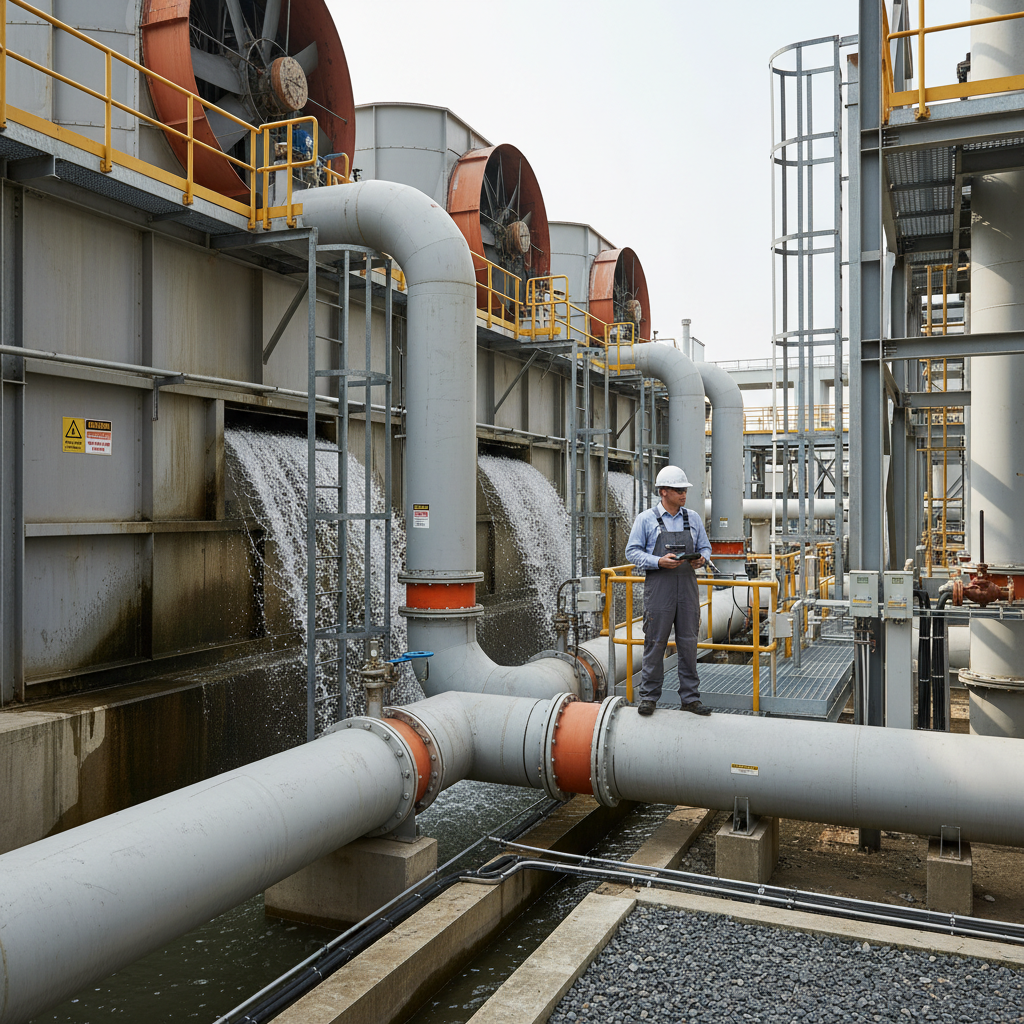
The most demanding environments are those where moisture and chemicals coexist, such as in the flue gas desulfurization (FGD) systems of power plants. Here, centrifugal fans must move large volumes of air laden with sulfuric acid mist. FRP fans are the preferred choice because they do not react with these acidic vapors, ensuring the structural integrity of the fan housing and impeller.
Additionally, in the petrochemical sector, heat exchangers and circular cooling towers rely on these fans to dissipate process heat. The use of FRP not only protects the equipment but also prevents the contamination of the cooling medium by eliminating the risk of rust flakes entering the water stream, thereby improving the overall efficiency of the heat exchange process.
The industry is moving toward "intelligent" airflow management, where FRP fans are integrated with variable frequency drives (VFDs) and real-time sensors. This allows the fan speed to adjust dynamically based on the actual heat load of the cooling tower, potentially reducing energy consumption by another 10-15% over fixed-speed systems.
Material science is also evolving, with the introduction of nano-reinforced resins that provide even higher tensile strength and better UV resistance. This ensures that fans installed in open-air cooling towers do not suffer from resin degradation due to prolonged sunlight exposure, extending the aesthetic and structural life of the equipment.
Lastly, there is a growing trend toward modular FRP designs. By standardizing the components of the centrifugal fan assembly, suppliers can offer faster lead times and easier onsite replacements, reducing the impact of equipment failure on industrial production schedules.
Despite the advantages, transitioning to FRP fans involves specific challenges. One primary concern is the initial cost, which is typically higher than that of basic steel fans. However, this is solved by conducting a Total Cost of Ownership (TCO) analysis, which accounts for the elimination of painting, coating, and frequent replacements.
Another challenge is the precision of the impeller balance. Because FRP is a molded material, any inconsistency in the glass fiber distribution can lead to imbalance. High-end suppliers solve this through precision CNC trimming and dynamic balancing tests before the unit leaves the factory.
Finally, compatibility with existing metal infrastructure can be a hurdle. The use of specialized FRP-to-metal transition flanges and gaskets ensures a leak-proof seal and prevents galvanic corrosion at the connection points, allowing for seamless integration into older plants.
| Feature | Galvanized Steel | Stainless Steel | FRP Composite |
|---|---|---|---|
| Corrosion Resistance | Low | Medium-High | Excellent |
| Weight / Inertia | High | High | Very Low |
| Initial Cost | Low | High | Medium-High |
| Maintenance Need | Frequent Coating | Low | Minimal |
| Service Life (Acidic) | Short | Moderate | Very Long |
| Vibration Damping | Low | Low | High |
FRP is superior in highly corrosive environments because it is chemically inert to many acids and alkalis that can still penetrate stainless steel over time. Additionally, FRP's significantly lower weight reduces the load on motors and bearings, leading to lower energy consumption and simplified installation processes.
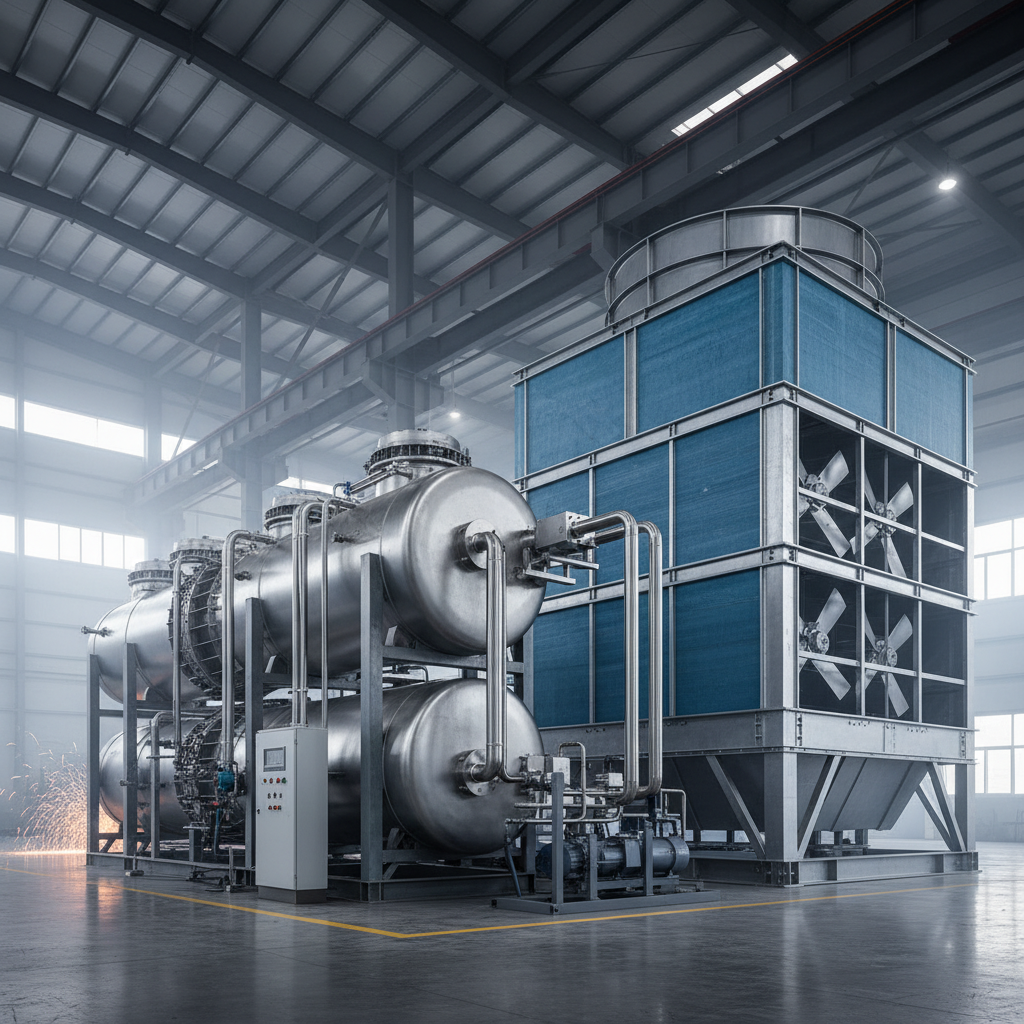
Centrifugal fans, acting as draught fans, create the necessary pressure differential to pull ambient air through the cooling tower's fill media. By optimizing the fan's blade geometry and material, suppliers can ensure a more uniform airflow, which maximizes the evaporation rate and lowers the cold water basin temperature.
Focus on their experience with FRP resin selection and their quality control for dynamic balancing. A reliable supplier should provide detailed performance curves, material certification for the specific chemicals in your process, and a clear track record of installations in similar industrial sectors like power or petrochemicals.
Yes, provided the correct resin is used. While standard polyester resins have limits, high-temperature vinyl ester or phenolic resins can withstand significantly higher thermal loads. It is essential to specify the maximum operating temperature to the manufacturer to ensure the material does not soften or lose structural integrity.
FRP fans require far less maintenance than metal fans because they do not need repainting or rust treatment. Maintenance typically focuses on the mechanical drive components—such as lubricating bearings and inspecting belt tension—rather than the structure of the fan itself, which is essentially maintenance-free.
Absolutely. One of the main advantages of FRP is the ability to mold the housing and impeller into custom shapes. This allows for the design of fans that fit into tight industrial footprints or integrate specifically with unique circular cooling tower diameters without requiring extensive site modifications.
The transition toward high-performance composite materials has fundamentally changed the expectations for industrial airflow systems. For operators in the environmental protection and power sectors, the shift to FRP centrifugal fans represents a strategic move from short-term cost-saving to long-term operational resilience. By eliminating the perennial struggle with corrosion and reducing the energy burden of heavy metal impellers, facilities can ensure a more stable and sustainable heat dissipation process.
Evaluating centrifugal fan suppliers now requires a deep understanding of material science and aerodynamic efficiency. Those who prioritize the synergy between FRP durability and precision engineering will find significant reductions in lifecycle costs and unplanned downtime. For further technical specifications or customized FRP equipment solutions, exploring the capabilities at www.hlfrp.com can provide the necessary insights to optimize your industrial cooling infrastructure.




Address
20 Xingyuan South Street, Zaoqiang County, Hengshui City, Hebei Province, China